Contact us
Active Power Banner 2026

The Most Efficient Way to Lift a BESS Container

Cranes have long been the default solution for lifting BESS containers, but they're not the only option. This guide explores alternative lifting methods, how portable container lifts work, and why more organizations are choosing to bring container lifting operations in-house.

Bison Marketing

3 Jun 5 Minutes

Lifting

Battery Energy Storage Systems (BESS) are playing an increasingly important role in renewable energy, utilities, industrial operations, and grid infrastructure. As more organizations deploy containerized energy storage systems, one challenge becomes increasingly common: how do you safely and efficiently lift a BESS container?

For many projects, the default solution is to use a crane. While cranes are a proven lifting method, they are not always the most efficient or practical option. Portable container lifts offer an alternative that allows organizations to handle ISO containers with greater flexibility, control, and efficiency.

Why Are BESS Containers Usually Lifted With Cranes?

Most BESS units are built inside standard ISO shipping containers or purpose-built containerized enclosures. These containers are often large, heavy, and filled with high-value equipment such as battery modules, power electronics, cooling systems, and fire suppression equipment.

Because of their size and weight, cranes have traditionally been used to install and relocate BESS containers. They provide high lifting capacity and are commonly available through lifting contractors.

For many applications, cranes remain an appropriate solution. However, they also introduce additional costs and operational constraints that may not suit every project.

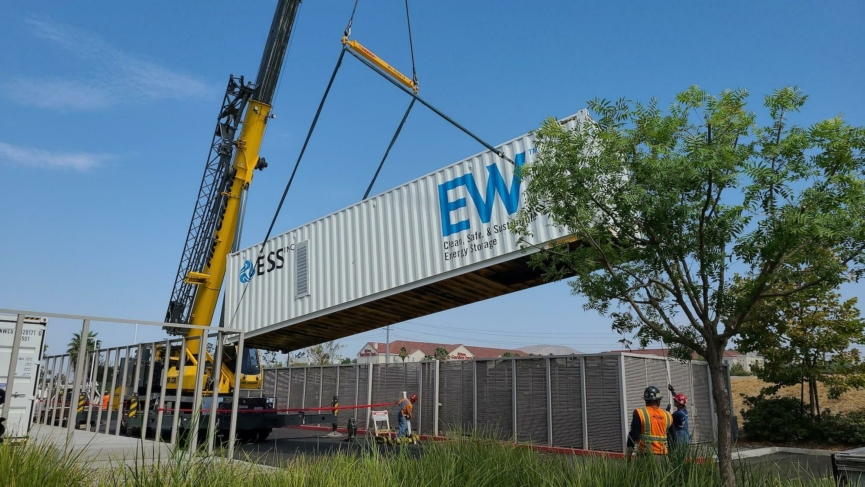
ESS Crane Image

The Challenges of Using Cranes for BESS Container Handling

Relying on cranes often means accepting delays, scheduling constraints, and ongoing lifting costs.

Organizations typically need to coordinate crane availability well in advance, organize qualified operators, prepare lift plans, and schedule work around contractor availability. If project timelines change, those arrangements often need to be made again.

These challenges become even greater on temporary construction sites, remote renewable energy projects, mining operations, or utility installations where cranes may not be readily available. In some locations, mobilizing a crane for a single container movement can become extremely expensive or simply not be feasible.

For organisations looking to improve flexibility and reduce dependence on external contractors, an alternative lifting method may provide significant advantages.

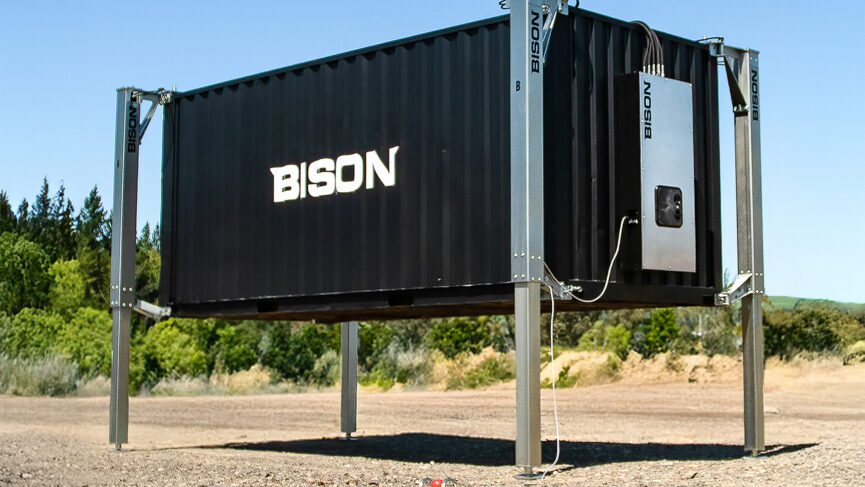
T Series Portrait 9th

What Are Portable Container Lifts and How Do They Work?

Portable container lifts are purpose-built systems designed to lift ISO containers directly from their corner castings without relying on cranes or permanent lifting infrastructure. Available with capacities from 10,000 to 64,000 kg (22,000–141,000 lb), these systems can handle everything from standard shipping containers to many containerized Battery Energy Storage Systems (BESS).

Unlike a crane, which lifts from above, portable container lifts attach directly to the container itself. This allows operators to safely raise the container wherever it is needed, creating clearance to position a trailer, support stands, skates, or other transport equipment underneath.

Because the equipment is portable, it can travel with the project and be used wherever containers need to be installed, relocated, or transferred.

The lifting process is straightforward.

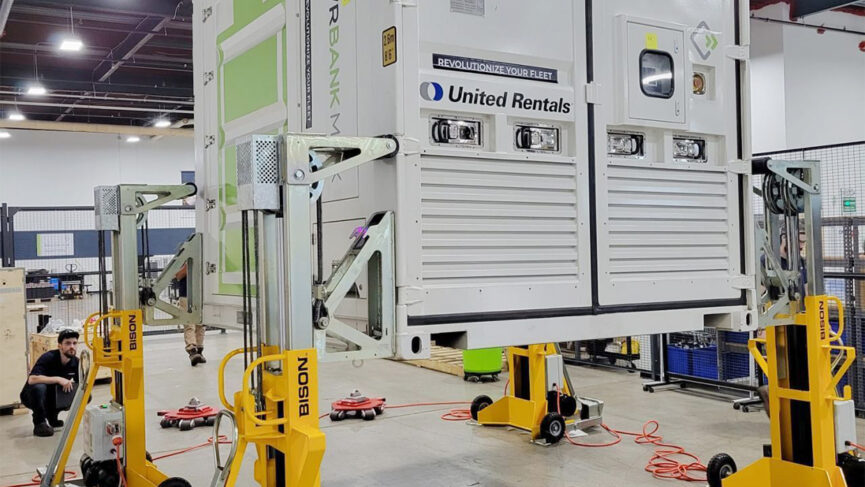
Four portable container lifts are attached to the ISO container's corner castings. Once connected, the system raises the container in a synchronized lift, keeping the load level throughout the operation.

When the required lifting height is reached, transport equipment or supports can be positioned beneath the container before it is safely lowered back into place.

Depending on the lifting system being used, a single operator can complete the entire transfer in as little as 10 minutes.

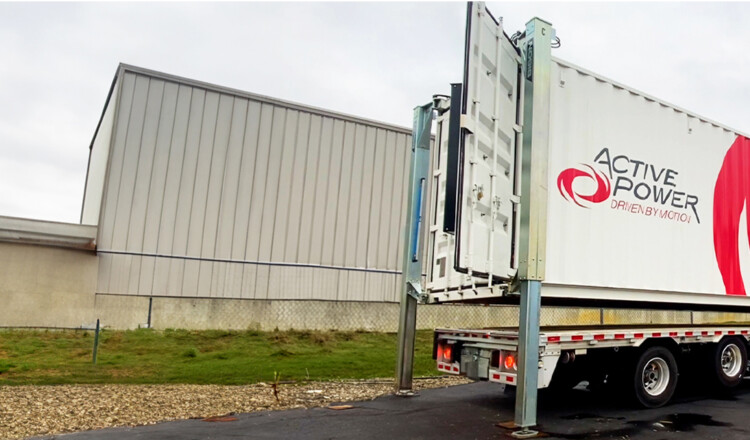
POWR2 BESS Container

Portable Container Lifts for BESS Applications

Portable container lifts are particularly well suited to battery energy storage projects because they provide greater flexibility over when and where containers can be moved.

Instead of relying on crane availability, organizations can carry out many lifting operations using their own equipment and personnel. This can reduce project delays, improve scheduling flexibility, and lower recurring lifting costs over the life of a project.

Whether BESS containers are being installed at substations, renewable energy facilities, industrial sites, or remote locations, portable container lifts offer a practical and efficient way to handle these high-value assets.

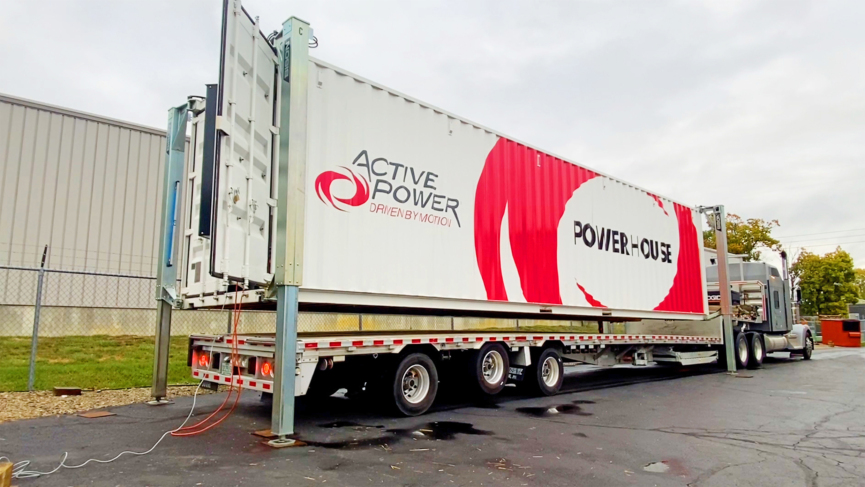
Active Power Block

Frequently Asked Questions

  • What is the true cost of using a crane to lift a BESS container?

    For many BESS projects, lifting and positioning a container is a critical part of the installation. While the lift itself may only take a short time, the process around it often becomes lengthy, complex, and expensive.

    A typical crane-assisted lift can look something like this:

    1. A crane is booked, often days or weeks in advance.

    2. A truck arrives with the BESS container (not always on schedule).

    3. The truck waits. Your team waits.

    4. The crane arrives, sometimes hours later than planned.

    5. The container is lifted into position in 30–60 minutes.

    6. A crane hire invoice of $1,000–$5,000 or more follows.

    Then the process repeats the next time the container needs to be installed, relocated, or removed.

    The lift itself usually isn't the problem. It's the planning, scheduling, waiting time, contractor dependence, and recurring costs that make crane-based container handling inefficient for many BESS projects.

  • Can you unload BESS containers without a crane?

    Yes. BESS containers can be unloaded using several alternatives to cranes, including portable container lifts, side loaders, tilt tray trucks, reach stackers, and forklifts. The most suitable option depends on the container weight, site conditions, and how frequently containers need to be moved.

  • What is the easiest way to lift a BESS container without a crane?

    For organisations that regularly handle containers, portable container lifting jacks provide a simple way to transfer containers on and off trucks without relying on external lifting services. The jacks attach to the container's corner castings and lift it vertically, allowing the truck to drive away before the container is lowered to the ground.

  • Are portable container lifts safe?

    When used correctly and within their rated capacity, portable container lifting jacks and hoists provide a safe method for lifting and positioning BESS containers. Modern systems incorporate features such as self-levelling technology, controlled lifting speeds, and secure attachment points to help ensure safe operation.

  • What industries use portable container lifts?

    Portable container lifts are used across a wide range of industries, including logistics, construction, defence, manufacturing, energy, mining, and modular construction. They are particularly valuable where containers need to be handled without permanent lifting infrastructure.

  • Can portable container lifting jacks lift fully loaded BESS containers?

    Yes. Portable container lifting jacks are available in a range of capacities and can be used to lift fully loaded BESS containers when operated within their specified load ratings.

Bison Portable Container Lifts

If you're regularly hiring cranes to lift shipping containers, container lifting jacks may provide a more flexible solution. Explore Bison's range of portable container lifting systems or contact our team to discuss the best option for your operation. The product range supports standard ISO shipping containers as well as many containerized energy storage systems used across utility, renewable energy, industrial, defense, and infrastructure applications.