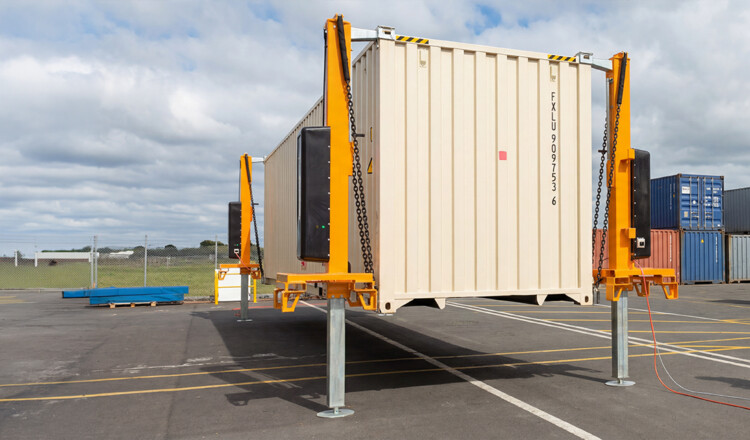
Lift Containers Without Sideloaders
Replace expensive, unreliable and inflexible sideloaders and swinglifts with in-house container lifting capability.
Sideloaders Cost You More Than Money.

High Cost Per Lift

Unreliable Availability

Dependency on Third Parties

Not Suitable for All Sites

Payload limitations
Take Back Control With Bison
Our container lifting jacks give your team the ability to lift containers in-house using your own equipment, on your own schedule.

Attach C-Lifts
Attach the lifting jacks to the container’s corner castings. Attachment methods vary by model, but several options do not require a forklift.

Lift & Drive Clear
The container lifts vertically in a controlled, stable motion. Once clear of the chassis, the truck drives away, leaving the container safely elevated.

The ROI Speaks for Itself
If you lift 300 or more containers a year, you can expect to recover your investment in under two years.*
And that doesn't account for the time saved by removing the scheduling, coordination, and waiting that comes with every sideloader booking.
* Based on industry average cost of sideloaders vs skeletal trailers.
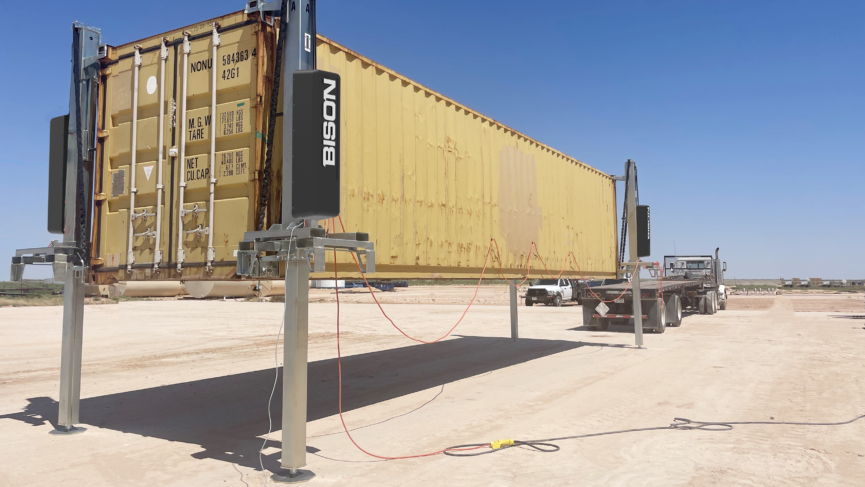
Trusted In Over 70 Countries





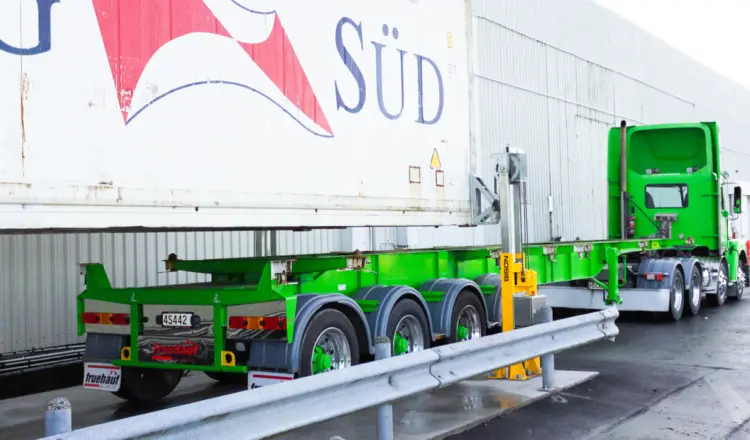
"Bison C-Lifts have kept my costs down, and made my staff happy, so everyone's on a winner!"
Sideloader availability couldn’t keep pace with container throughput during peak season. Bringing the lift in-house with Bison resolved the bottleneck and freed up skeletal trailer supply.
Lower Costs. More Control. No Contractor Dependency.

Reduced Cost Per Lift

Operational control and independence

Lift heavy containers without surcharge

Increase volume as needed

Lift Containers where you need them
Match The C-Lift Model To Your Operation
From portable hydraulic jacks to high-capacity systems for the heaviest containers, Bison has a model to suit your site conditions, volume, and budget.


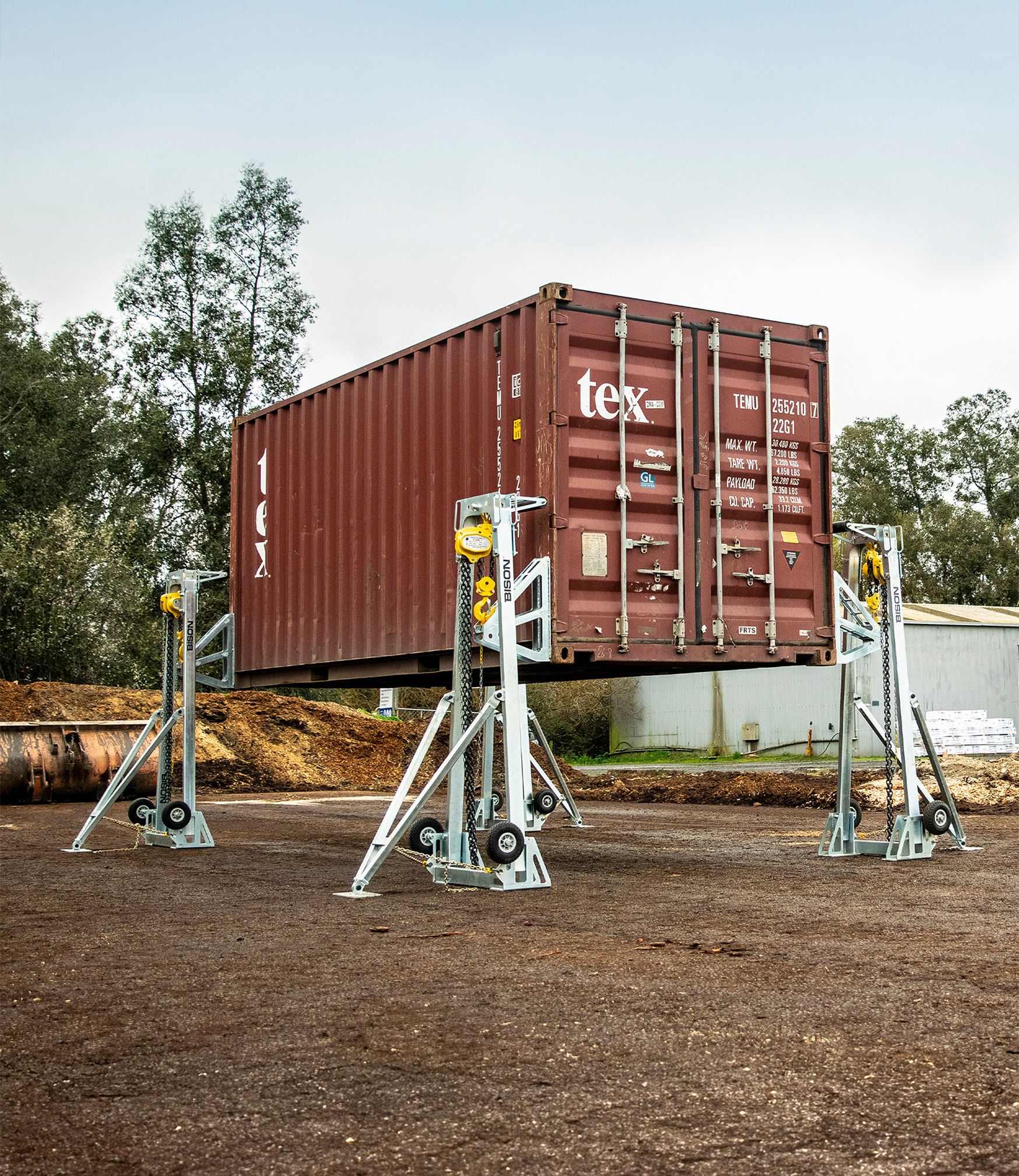
Which Model Is Right For You?
Cut the Sideloader Dependency
-
What are the downsides of lifting containers with sideloaders and swinglifts?
For many operators, sideloaders and swinglifts are the default option for getting containers on and off trucks. But relying on a hired service means giving up control over cost, availability, and timing.
The most common issue is cost. Hiring a sideloader is significantly more expensive than a standard skeletal trailer. This is especially true for heavy containers that exceed a sideloader’s legal road payload. In this case, transport companies often have to send two vehicles: a skeletal for haulage and a swinglift acting as a mobile crane. Not surprisingly, that comes with a significant cost.
The second problem is control. Sideloaders are usually owned by transport companies, not the businesses they serve. Availability, scheduling, and pricing sit entirely outside your operation. When container volumes shift or timelines change, you’re working around what the transport company can provide, not what your operation needs.
-
How are Bison container lifts better than sideloaders?
Bison container lifting jacks not only help reduce the cost per lift, they also put you back in control of your operation. By owning your container lifting equipment instead of hiring it, your operation is no longer dependent on a third party to handle containers. Scheduling is yours, and so is the ability to respond when volumes or timelines change without notice.
In addition, Bison container lifting jacks can be used in areas that are too tight for sideloaders and swinglifts due to not requiring side clearance. Bisons attach to a container’s corner castings and lift it vertically off the truck chassis. The truck drives away and the container lowers to the ground.
-
Why do businesses choose Bison container lifts over sideloaders?
For operators paying sideloader rates regularly, the financial case is clear. Most operations see payback within a year or two from avoided hire costs alone. But what businesses consistently value more than the saving is the control.
When the lift belongs to your operation, containers move when you need them to. Availability stops being a constraint you plan around. Whether volumes have shifted, timelines have moved, or swinglift availability is constrained, your operation keeps moving.
-
Should transport companies use Bison container lifts?
For transport companies currently running sideloaders, Bison opens a different kind of opportunity.
Routing a swing lift to a remote or outlying client is often marginal business: high travel cost, lower utilisation, and a sideloader tied up far from where it earns most. A Bison system deployed at that client’s site changes the equation. Containers get handled locally, your sideloader stays in the area where utilisation is highest, and you retain the client relationship without the logistics overhead.
We have worked with transport companies who have used exactly this model to extend their service reach without expanding their swing lift fleet.