Contact us
Active Power Banner 2026

How to Lift a Modified Shipping Container: A Practical Guide

Compare the main methods for lifting modified shipping containers — from cranes and forklifts to portable container lifting jacks. Find the right approach for your operation.

Bison Group

8 Apr 5 Minutes

Lifting

Modified shipping containers aren’t like standard freight boxes. When a container has been fitted out as a battery energy storage system, a mobile laboratory, an oil and gas service unit, or any other purpose-built asset, the handling requirements change dramatically.

These containers are heavier — often 20,000 kg (44,000 lb) or more when fully loaded. They often house sensitive, expensive equipment that can be damaged by shock, tilt, or vibration. And they frequently need to be positioned on sites where conventional lifting infrastructure doesn’t exist: remote wellheads, construction sites, grid-edge energy installations, or disaster response zones.

So how do you actually get a modified shipping container off a truck and onto the ground — safely, efficiently, and without wrecking what’s inside? This guide compares the main options.
What Makes Modified Containers Harder to Lift?

Before looking at methods, it’s worth understanding why standard container handling approaches often fall short for modified containers.

Weight distribution is uneven. A standard shipping container loaded with cargo tends to have reasonably distributed weight. A modified container might have heavy equipment concentrated at one end, or a high center of gravity from tall rack-mounted systems. This makes level lifting critical.

The contents are fragile and high-value. You wouldn’t lift a server rack with a forklift from one end. The same logic applies to a containerized BESS, a mobile medical facility, or an industrial gas processing module. Smooth, controlled, level lifting matters.

Deployment sites are unpredictable. Modified containers go where the work is. That might be a flat factory floor, but it’s just as likely to be an unpaved site with uneven terrain, limited access, and no overhead clearance.

Lifting is repeated, not one-off. Manufacturers lift containers dozens of times during the build process. Field operators deploy and recover containers across multiple sites. The handling method needs to be practical for repeated use, not just a single-event solution.

The Main Methods for Lifting Modified Containers

1. Portable Container Lifting Jacks

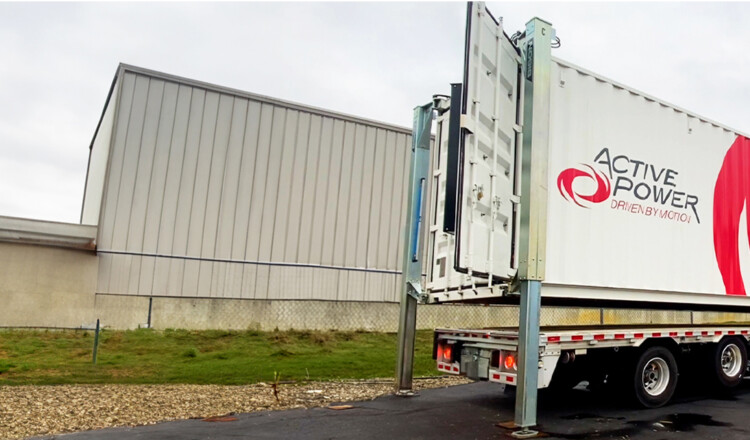
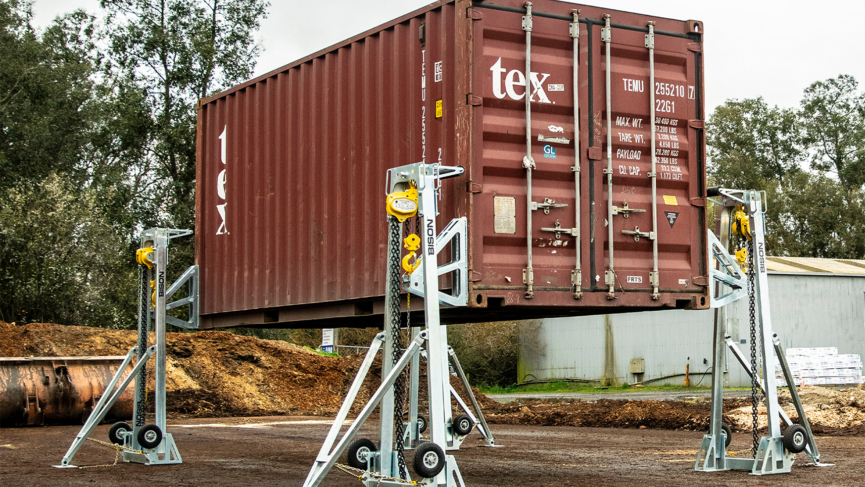
Container lifting jacks are a newer category of equipment designed specifically for lifting ISO containers on and off truck trailers. A set of jacks positions at the container’s corner castings, lifts vertically, and the truck drives out from underneath.

Strengths:

  • Portable — systems can be transported by truck, by air, or stored inside the container.

  • Works on unprepared and uneven ground.

  • No fixed infrastructure, no overhead clearance needed.

  • Can be operated by one person (automated models) or a small team (manual models).

  • Lift capacities range from 10,000 kg up to 45,000 kg (22,000 to 98,000 lb) depending on the model.

  • Self-leveling technology keeps the container level throughout the lift, protecting internal equipment.

  • Cost-effective for repeated lifts — no per-use hire charges.

Limitations:

  • Requires container length clearance behind the truck.

  • Lifting jacks need to be transported to the lift location (although some models retro-fit to and travel with the container)

  • Not suited for stacking containers.

Best suited for: Manufacturers of modified containers who need to lift containers before, during or after production. Field operators deploying containers to remote or constrained sites. Any operation that needs independent, on-demand container lifting without cranes or contractors.

M Series Portrait 4

2. Mobile Cranes

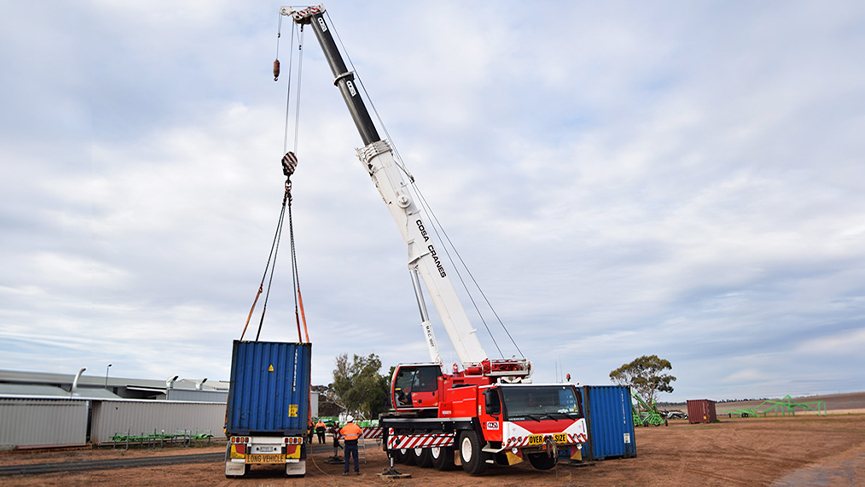
Mobile cranes (truck-mounted or rough-terrain) are the most common solution for one-off or infrequent container lifts.

Strengths: High lift capacity, widely available, can reach over obstacles.

Limitations for modified container operations:

  • Expensive per-use (hire costs typically run into thousands of dollars per mobilization).

  • Requires advance booking — often days or weeks.

  • Needs a certified operator and, depending on jurisdiction, a lift plan and safety review.

  • Requires adequate site access and ground conditions for the crane itself.

  • Creates a third-party dependency that can delay deployments.

Best suited for: Infrequent lifts where cost per lift is acceptable, or lifts requiring extreme reach or height.

Mobile Crane 865x467

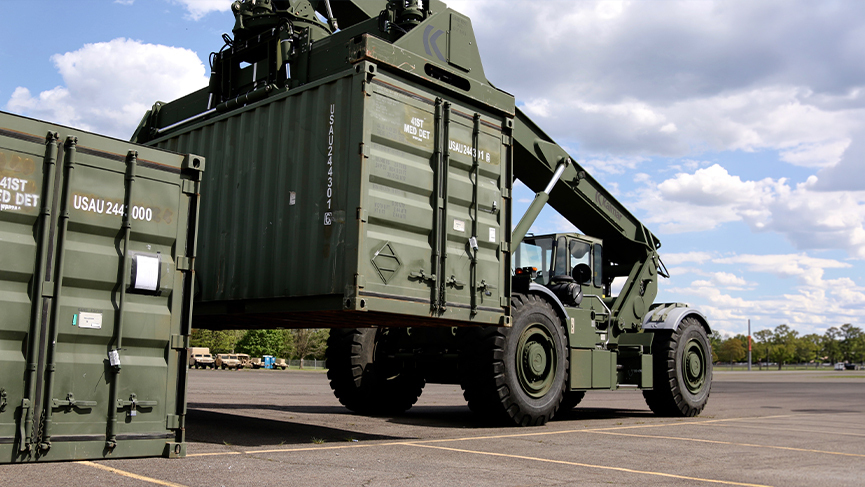
3. Forklifts

High-capacity forklifts can lift some modified containers, particularly lighter units.

Strengths: Many facilities already own one. Fast for short moves.

Limitations for modified container operations:

  • Standard forklifts lift from the center of the container’s length, creating a significant tipping risk with unevenly loaded modified containers.

  • Reaching all four corner castings requires specialist attachments.

  • Most forklifts lack the capacity for fully loaded modified containers.

  • Not practical for field deployment.

  • Not suited to longer 40’, 45’ and 53’ containers

Best suited for: Moving light or empty containers short distances within a facility. Not recommended as the primary lift method for heavy, high-value modified containers or field operations.

Forklift2 865x467

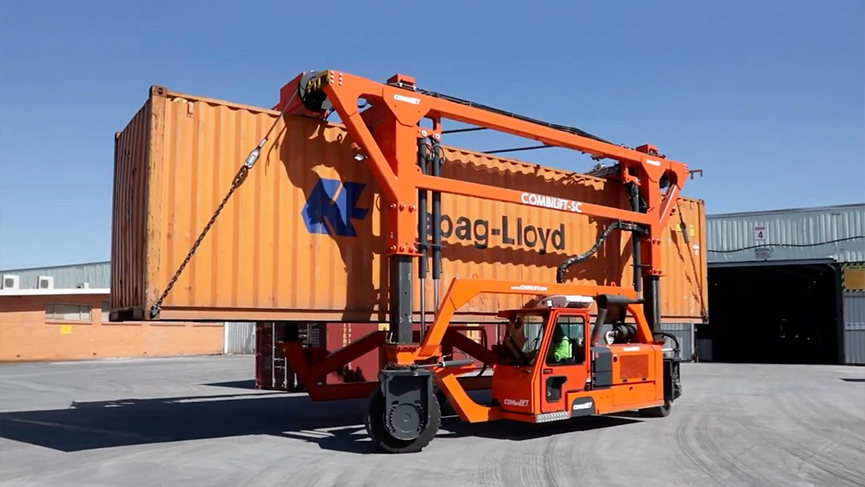
4. Overhead Gantry Cranes and Straddle Carriers

These are the workhorses of ports and large container yards.

Strengths: High throughput, high capacity, designed for repeated lifts.

Limitations for modified container operations:

  • Require massive capital investment and permanent installation.

  • Need reinforced concrete surfaces.

  • Occupy significant floor space.

  • Completely impractical for field deployment.

  • Overkill for operations handling low to medium container volumes.

Best suited for: High-volume container terminals. Rarely practical for modified container manufacturers or deployers.

Straddle Carrie 865x467

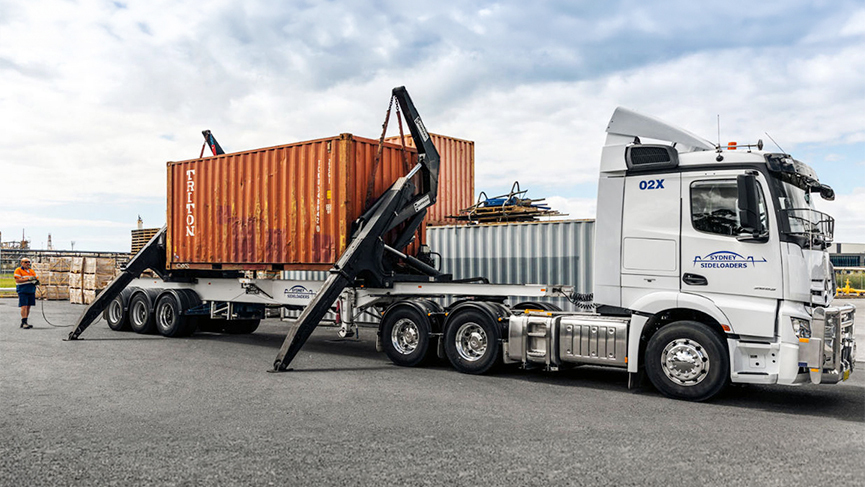
5. Side Loaders (Swing Lifts)

Side loaders are truck-mounted cranes that can haul and lift containers from the side.

Strengths: Self-contained (the truck brings its own lifting capability). Can haul, load and unload without additional equipment.

Limitations for modified container operations:

  • Limited availability in some regions - while sideloaders are mainstream in a few countries (i.e. Australia, New Zealand, Malaysia), they’re not commonly available across most of the world.

  • Transport company dependency - sideloader services are typically contracted from transport firms, leading to reduced independence and control over your operation.

  • Requires the container to be accessible from the side, which isn’t always the case in constrained sites.

Best suited for: Delivery and pickup of containers where sideloaders are readily available and the truck can access the site.

Sideloader 865x467

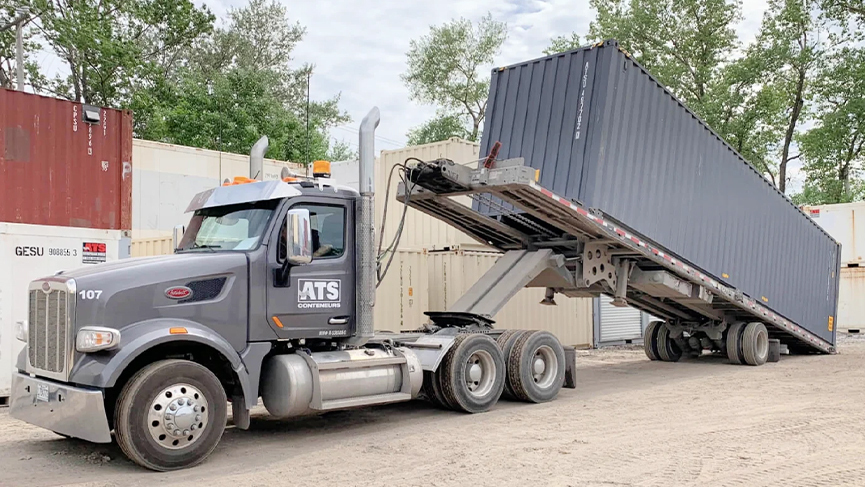
6. Tilt-Bed Trucks

The truck bed tilts and the container slides on or off.

Strengths: Self-contained. Hauls container too. No separate lifting equipment needed.

Limitations for modified container operations:

  • Limited capacity — most top out around 8 tonnes (18,000 lb), which is below the weight of many fully loaded modified containers.

  • Sliding introduces severe risk to internal equipment — electronics, rack-mounted systems, and loose components can be damaged by the angle and impact.

  • Requires container length clearance behind the truck.

Best suited for: Empty containers or containers with robust, non-sensitive contents.

Tilt Truck 865x467

Choosing the Right Method

The right approach depends on three factors: how often you lift, where you lift, and what’s inside the container.

If you’re lifting modified containers regularly — whether during manufacturing, across multiple deployment sites, or as part of ongoing field operations — the economics shift decisively away from per-use crane hire and toward owning your own lifting capability.

If your containers go to unpredictable or constrained sites, your options narrow to equipment that is portable and doesn’t depend on site infrastructure.

And if the contents are high-value or sensitive, the lifting method needs to be smooth, level, and controlled — not improvised.

For most organisations that manufacture, deploy, or operate modified shipping containers, portable container lifting jacks represent the best balance of capability, cost, and flexibility. They remove the dependency on cranes and contractors, work in the widest range of site conditions, and protect the asset during every lift.