Contact us
T Series Banner

How to Lift a Shipping Container Without a Crane

Cranes have long been the default solution for lifting shipping containers, but they're not the only option. This guide explores alternative lifting methods, how container lifting jacks work, and why more organizations are choosing to bring container lifting operations in-house.

Bison Marketing

3 Jun 5 Minutes

Lifting

Shipping containers are global assets, used to transport and store everything from construction equipment and industrial machinery to energy storage systems and military assets. But once a container arrives on site, the challenge becomes how to safely lift it.

For many businesses, cranes are the default solution. They are powerful, widely available, and capable of lifting fully loaded containers with ease. However, crane hire can be expensive, requires advance scheduling, and is not always practical in remote locations or confined work sites.

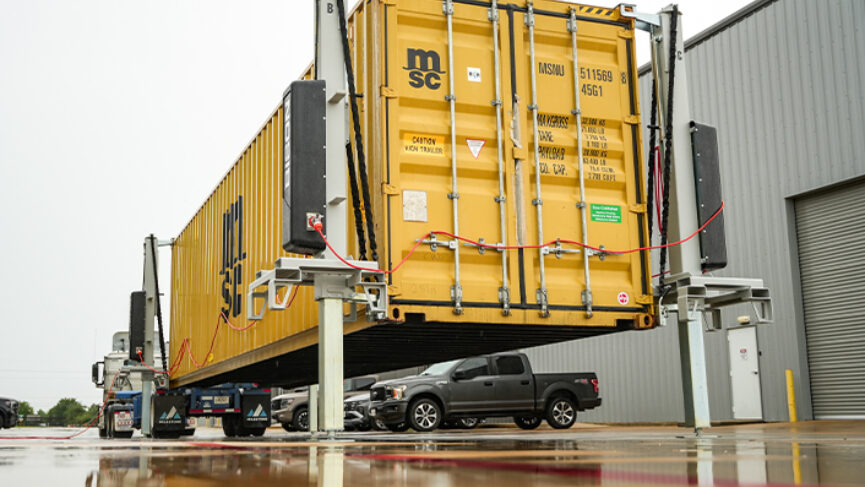
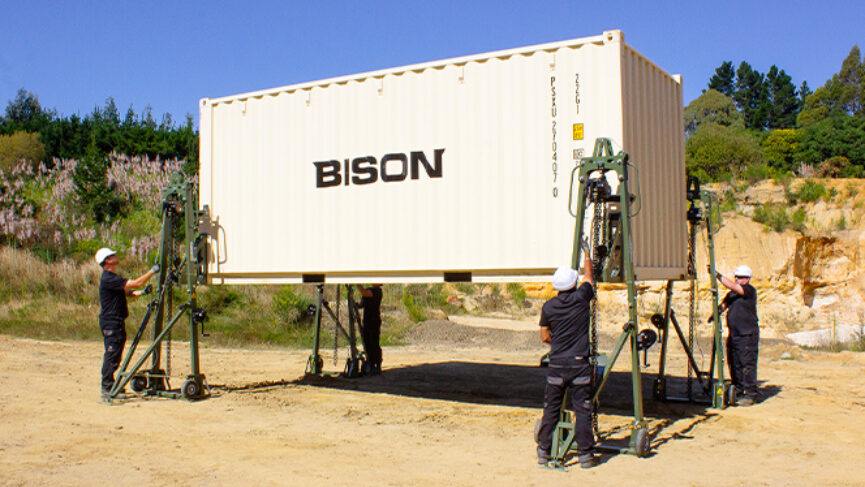
As a result, more organizations are looking for ways to lift shipping containers without relying on cranes. One increasingly popular alternative is the use of container lifting jacks. These portable lifting systems allow operators to lift shipping containers using their own equipment and personnel, providing greater flexibility and control over container lifting operations.

In this guide, we'll explore the different ways to lift a shipping container without a crane, how container lifting jacks work, and why they are becoming a popular alternative to crane hire.
Why Look for an Alternative to Crane Hire?

While cranes remain an effective way to lift shipping containers, they are not always the most practical solution.

For starters, crane hire can get expensive very quickly. Many organizations spend up to $5,000 each time they need to bring in a crane, and this can be even higher for particularly heavy containers or when lifting in remote and complex locations. That might be fine as a one-off cost, but for organizations who need to lift containers regularly, crane hire is a significant expense.

Furthermore, every container lift requires hiring specialized equipment, coordinating contractors, and working around external schedules. If a container needs to be lifted at short notice, waiting for crane availability can introduce unnecessary delays.

Site conditions can create additional challenges. Some locations have limited space, restricted access, or ground conditions that make crane operations difficult or expensive. Remote worksites may also face the added cost of transporting lifting equipment and personnel to the site.

As a result, many organizations are looking for ways to lift shipping containers using equipment they own and control themselves. This has led to growing interest in container lifting jacks, which provide a safe and efficient alternative to crane hire while giving operators greater control over container lifting operations.

M Series Portrait Form 2

How Can You Lift a Shipping Container Without a Crane?

There are several ways to lift a shipping container without using a crane. The right solution depends on factors such as container weight, site conditions, frequency of use, and available equipment.

Common alternatives to crane lifting include:

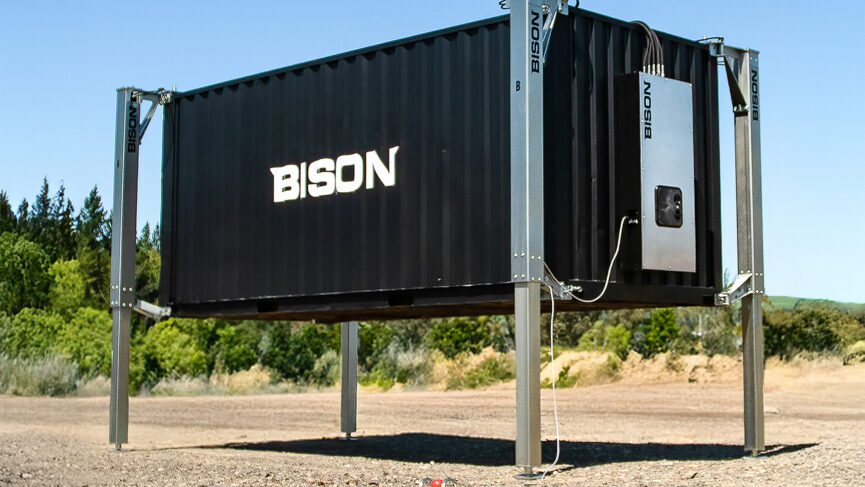
Container lifting jacks: Portable lifting systems that attach directly to a container's corner castings and lift it vertically from the ground or trailer.

Side loaders: Specialized trucks equipped with hydraulic lifting equipment capable of lifting containers without a separate crane. However, they come with many of the same limitations are cranes, such as recurring hire cost and dependency on third-parties.

Tilt tray trucks: Vehicles that use a tilting deck to move containers on and off a truck. Due to weight limitations, these are best suited to light or empty container delivery and relocation rather than lifting fully loaded containers.

Reach stackers and forklifts: Heavy lifting equipment commonly used in ports, logistics yards, and industrial facilities. These machines are expensive and typically require significant infrastructure, operator training, and space to operate safely.

Each of these methods has advantages and limitations. However, for organizations looking to lift shipping containers on demand without relying on contractors or large lifting equipment, container lifting jacks have become an increasingly popular solution.

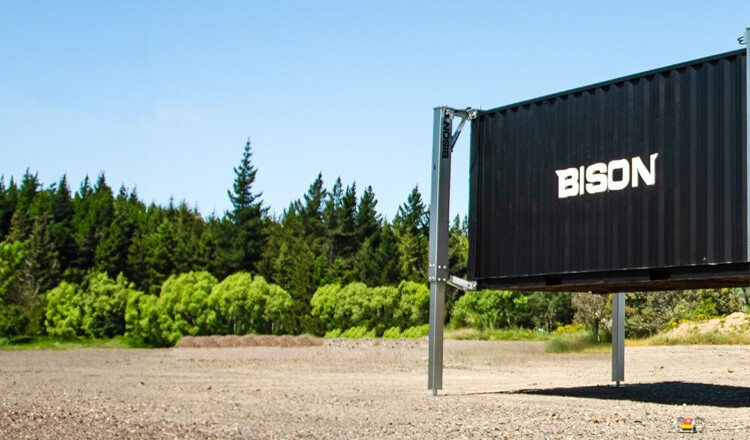
Unlike cranes, side loaders, and reach stackers, container lifting jacks are portable and can be transported directly to the lifting location. This gives operators greater flexibility while reducing dependence on third-party lifting services.

T Series Portrait 9th

How Do Container Lifting Jacks Work?

Container lifting jacks provide a simple and efficient way to lift shipping containers without a crane.

The system attaches directly to the container's ISO corner castings, allowing the container to be lifted vertically while remaining stable and level throughout the lifting process.

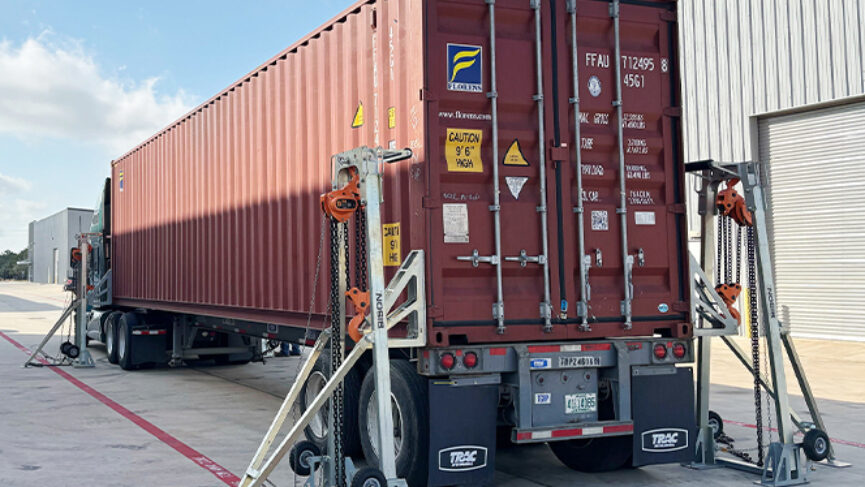
Container lifting jacks work in four simple steps:

  1. The lifting jacks are attached to the container's corner castings.

  2. The container is raised clear of the truck or trailer.

  3. The truck drives out from underneath the container.

  4. The container is lowered to the ground and the lifting equipment is removed.

Depending on the system being used, the entire lifting operation can be completed in as little as 8 to 10 minutes.

GPW 1

Take Control of Your Container Lifting

One of the biggest advantages of container lifting jacks is control.

Instead of relying on crane availability and external contractors, organizations own the lifting equipment themselves. Containers can be lifted whenever required, using existing site personnel and equipment.

This reduces dependence on third-party lifting services and gives operators greater flexibility when planning container lifts.

Because container lifting jacks are portable, they can be transported directly to the lifting location and deployed wherever they are needed. This makes them particularly valuable in remote locations, temporary worksites, and facilities where traditional lifting infrastructure is unavailable.

Mantis Team 865x487

Frequently Asked Questions

  • What is the true cost of crane hire?

    For many industrial sites, container lifting is a routine job that should be simple. Yet more often than not, it becomes a lengthy, complex, and costly process:

    1. A crane is booked – often days in advance.

    2. A truck arrives with a loaded container (rarely exactly when expected).

    3. The truck waits. Your team waits.

    4. The crane finally arrives (sometimes hours late).

    5. The lift takes 30–60 minutes.

    6. An invoice for $1,000–$5,000 and more follows.

    And the cycle repeats every time a container needs to be lifted.

    The lift itself usually is not the issue. The coordination, waiting time, and recurring contractor costs are.

  • Can you unload a shipping container without a crane?

    Yes. Shipping containers can be unloaded using several alternatives to cranes, including container lifting jacks, side loaders, tilt tray trucks, reach stackers, and forklifts. The most suitable option depends on the container weight, site conditions, and how frequently containers need to be moved.

  • What is the easiest way to lift a shipping container without a crane?

    For organisations that regularly handle containers, container lifting jacks provide a simple way to transfer containers on and off trucks without relying on external lifting services. The jacks attach to the container's corner castings and lift it vertically, allowing the truck to drive away before the container is lowered to the ground.

  • Are container lifting jacks safe?

    When used correctly and within their rated capacity, container lifting jacks provide a safe method for lifting and positioning shipping containers. Modern systems incorporate features such as self-levelling technology, controlled lifting speeds, and secure attachment points to help ensure safe operation.

  • What industries use container lifting jacks?

    Container lifting jacks are used across a wide range of industries, including logistics, construction, defence, manufacturing, energy, mining, and modular construction. They are particularly valuable where containers need to be handled without permanent lifting infrastructure.

  • Can container lifting jacks lift fully loaded containers?

    Yes. Container lifting jacks are available in a range of capacities and can be used to lift fully loaded ISO shipping containers when operated within their specified load ratings.

Explore Range

If you're regularly hiring cranes to lift shipping containers, container lifting jacks may provide a more flexible solution. Explore Bison's range of portable container lifting systems or contact our team to discuss the best option for your operation.