Contact us
Mantis Banner Image 2

Container Handling in Expeditionary Logistics - How to Move Containers Without Infrastructure

Bison Marketing

18 Dec 5 minutes

Defense

In expeditionary logistics, mobility and self-sufficiency are everything. Defense teams rely on containerized systems such as communications and power units, maintenance shelters and command modules to sustain operations in austere and unpredictable environments.

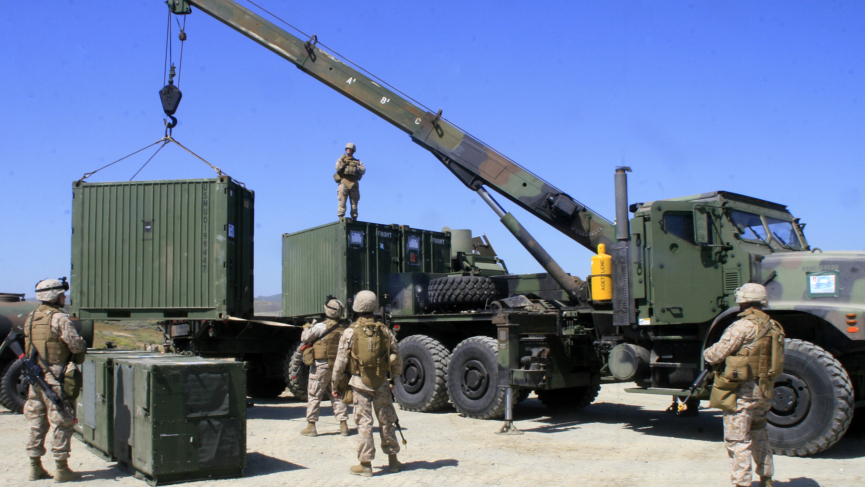
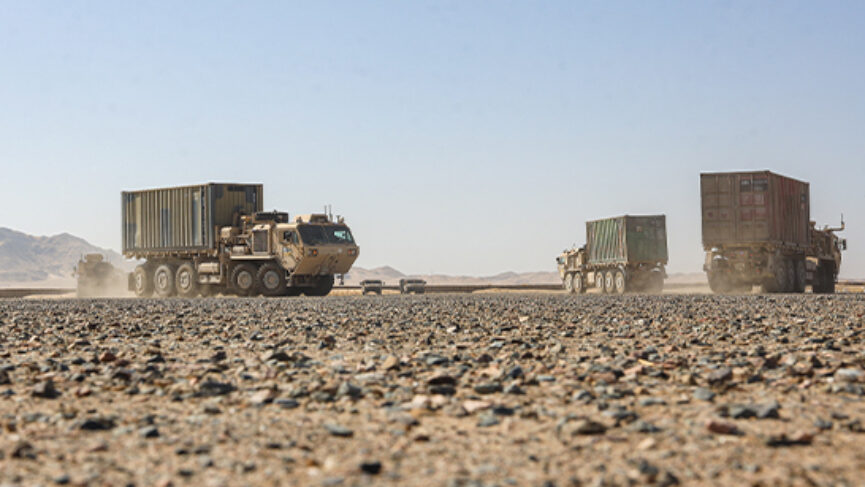
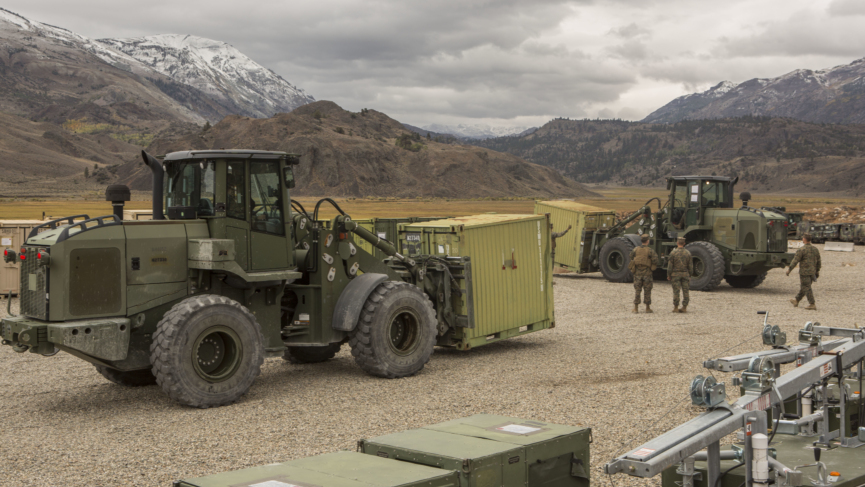
Yet, handling these containers in the field is rarely straightforward. Standard equipment like cranes, forklifts, and PLS vehicles are often too large to deploy forward, difficult to transport, or dependent on infrastructure that doesn’t exist. When missions extend into remote or contested areas, the ability to lift, move, and position containers safely without heavy machinery or contractor support becomes mission-critical.

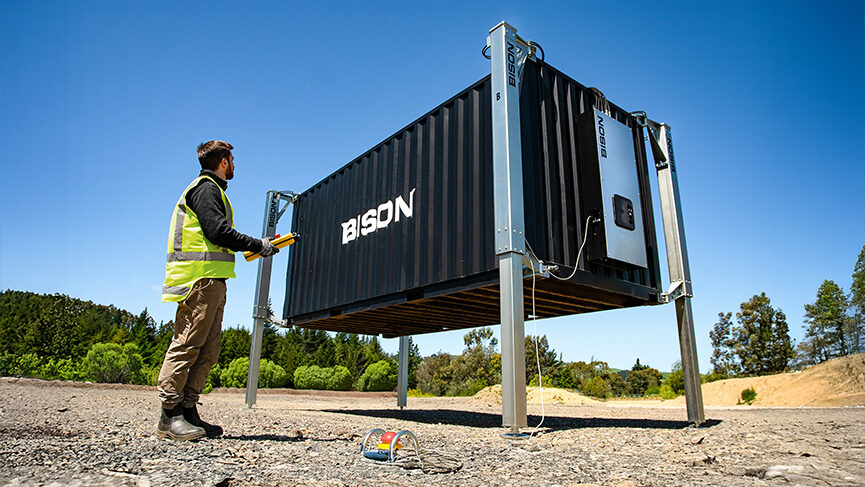
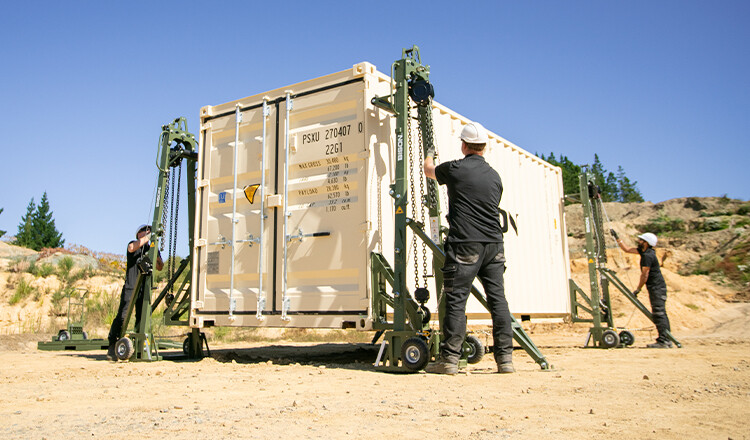
Expeditionary logistics requires compact, rugged, and deployable handling systems that can be transported with the unit, operated by minimal personnel, and set up quickly on uneven terrain.

8395826

Core Challenges

Expeditionary logistics demands the ability to establish, supply, and sustain operations in environments where infrastructure is minimal or nonexistent. Containers enable these missions, carrying communications systems, power units, fuel, rations, and other essentials. However, handling them in austere or contested locations presents unique challenges.

Defense teams operating in the field often face:

  • Limited or no access to heavy equipment. Cranes, forklifts, and PLS vehicles are difficult to deploy forward and may not be available at the point of need. Their absence can slow setup, resupply, and recovery operations.

  • Challenging terrain and conditions. Soft ground, uneven surfaces, or restricted spaces make standard lifting and transport methods unsafe or impractical.

  • Time-critical operations. Missions require rapid setup and redeployment, but reliance on conventional equipment or contractor support adds delay and complexity.

In expeditionary environments, every minute counts. Overcoming these challenges requires container handling systems that are portable, rugged, and quick to deploy, giving armed forces the freedom to lift, move, and reposition containers independently wherever the mission takes them.
Steps to Improve Container Handling in Expeditionary Logistics

Improving container handling in expeditionary environments is about enabling independence, flexibility, and speed in the field. In places where infrastructure is limited and missions evolve rapidly, every piece of equipment must support self-sufficiency. The following steps outline practical ways to strengthen field logistics and reduce operational friction.

1. Plan for Container Handling from the Start

In many deployments, container handling is only considered once assets arrive on site, leading to delays, limited equipment availability, or reliance on ad-hoc methods. Incorporating handling requirements early in mission planning ensures teams have the right capability on hand before deployment.

Assess what types of containers will be used, where they will need to be positioned, and how they’ll be moved between staging, operating, and recovery points. Planning ahead prevents logistics bottlenecks and ensures containers can be deployed, repositioned, or extracted efficiently, even in dynamic or contested conditions.

1572388

2. Reduce Dependency on Heavy and Specialized Vehicles

Cranes, forklifts, and PLS-type vehicles provide unmatched lift capacity but are rarely practical for forward operations. They require transport assets, skilled operators, and flat ground – luxuries that expeditionary missions often lack.

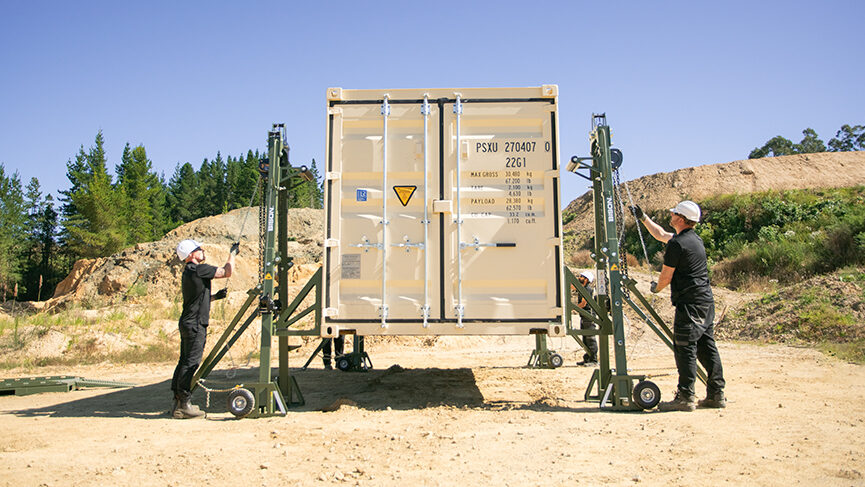
Identify where these vehicles currently constrain mobility or limit reach. By supplementing them with compact, modular systems that can travel with the unit, teams gain flexibility without adding logistical burden. Portable lifting systems can handle day-to-day container movements on their own, leaving heavy vehicles for larger, less time-sensitive tasks.

273565

3. Design for Terrain and Mobility Challenges

Expeditionary operations take place on uneven ground, soft soil, and unpredictable terrain that can compromise traditional handling methods. Even small shifts in load stability or ground conditions can lead to accidents, equipment damage, or mission delays.

Map typical field environments and assess how terrain affects lift setup and movement paths. Equipment designed with wide base stability, low ground pressure, and modular setup can operate safely in varied conditions. Integrating this type of system allows container operations to continue where heavy gear can’t safely deploy.

7849342

4. Increase Responsiveness Through Self-Sufficient Systems

In the field, waiting for equipment, contractors, or additional support to arrive can halt mission tempo. To avoid these delays, container handling capability should deploy with the unit — ready for use immediately.

Compact systems that pack down into a small footprint and require minimal personnel to operate can transform logistics agility. They enable teams to move containers for resupply, maintenance, or redeployment on their own schedule. This independence strengthens mobility and supports faster decision-making in changing operational conditions.

Mantis NDE

5. Train for Deployment Ready Handling Procedures

Even with capable equipment, success depends on skilled operators. In expeditionary contexts, container handling must be simple, fast, and safe – and that comes from preparation.

Integrate container handling into pre-deployment training so personnel are confident setting up, operating, and maintaining field systems. Training should emphasize safety in uneven terrain, load stability, and rapid recovery of equipment under pressure. Consistent, practical drills ensure that when missions shift, teams can adapt quickly and continue operating without outside assistance.

T Series 2024 22

Advancing Container Handling Capability for Expeditionary Logistics

  • Expeditionary logistics depends on mobility, independence, and speed.

  • Heavy lifting equipment is effective on base but rarely practical in the field.

  • Terrain, distance, and infrastructure gaps often limit traditional container handling methods.

  • Portable, self-sufficient systems enable safe, efficient handling anywhere missions deploy.

  • Embedding handling capability into planning improves responsiveness and mission tempo.

  • Modern lifting solutions like the T Series, Mantis, and SDG give defense teams true field flexibility — to lift, move, and redeploy containers wherever operations demand