Contact us
CTDS Banner 2

Containerized Defense Systems - How to Design for Mobility and Deployment

Bison Marketing

18 Dec 5 minutes

Defense

Steps to Improve Deployability in System Design

Improving deployability begins long before a system is built. It starts in the design phase where structural, mechanical, and logistical considerations determine how a containerized platform will perform once it leaves the factory floor. The following steps outline how engineering teams can embed mobility and deployability into their systems from the start.

1. Engineer Mobility and Lifting into the Concept Phase

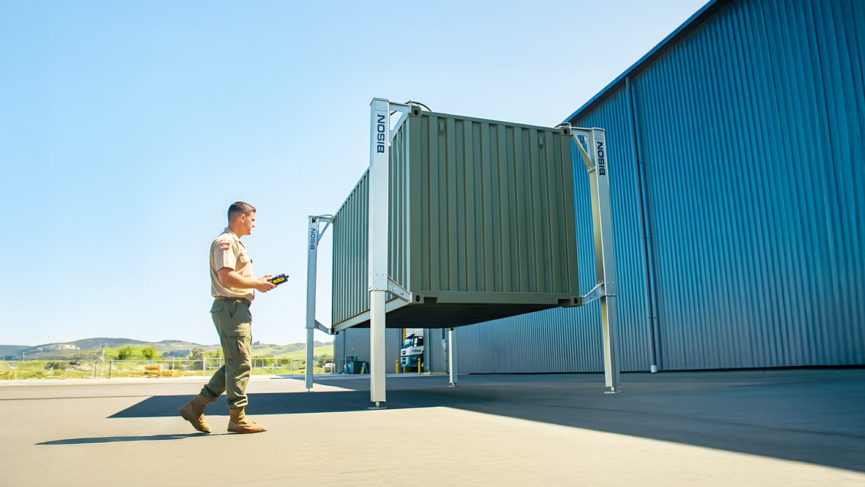
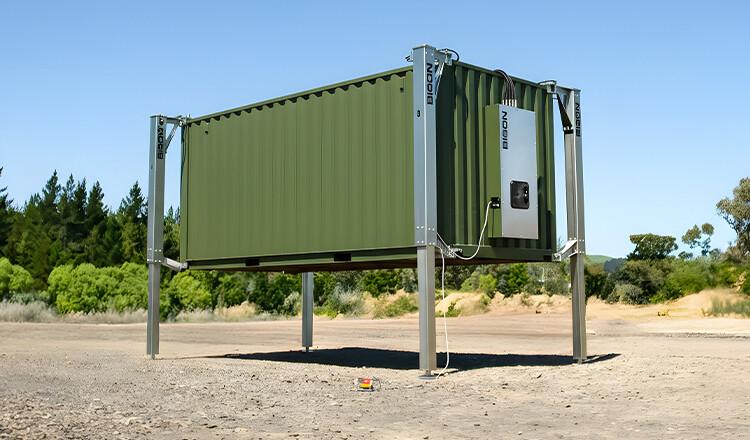
Deployability should be treated as a design requirement, not an afterthought. Too often, handling is addressed only once a system is complete, forcing expensive redesigns or reliance on external assets for movement. By incorporating lifting and mobility considerations early – such as integrated jack points, structural interfaces, or modular leg systems – engineers can ensure the system is self-sufficient in the field. Early container handling integration reduces risk, improves transportability, and ensures the system can be safely deployed and recovered under real-world conditions.

2074037

2. Match Handling Design to Operational Use

Every system has a distinct operational profile. Some will remain semi-permanent at a base, while others must deploy repeatedly under field conditions. Understanding how, where, and how often the system will move is critical to choosing the right handling approach. Systems designed for frequent deployment may benefit from self-lifting or modular leg systems that can be operated by minimal personnel, while heavier or less mobile units may integrate reinforced lifting points compatible with PLS or crane interfaces. Designing with actual use cases in mind ensures handling capability aligns with mission requirements – not assumptions.

8389852

3. Design for Flexibility and Non—Standard Loads

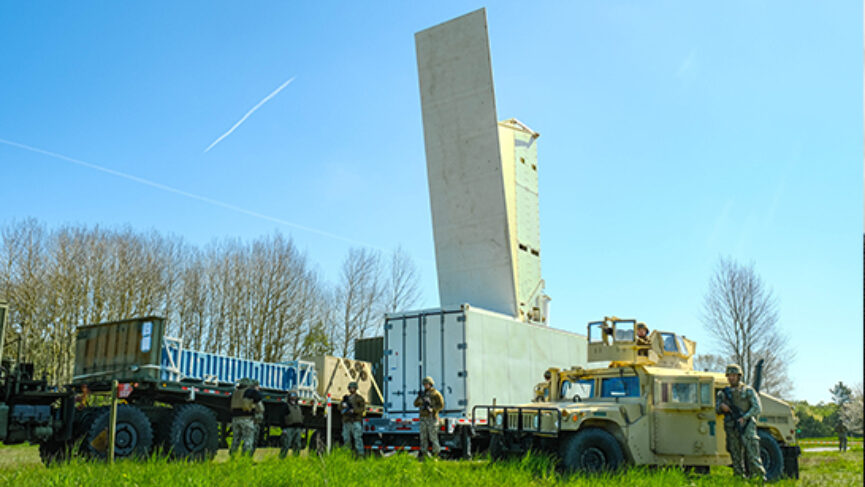
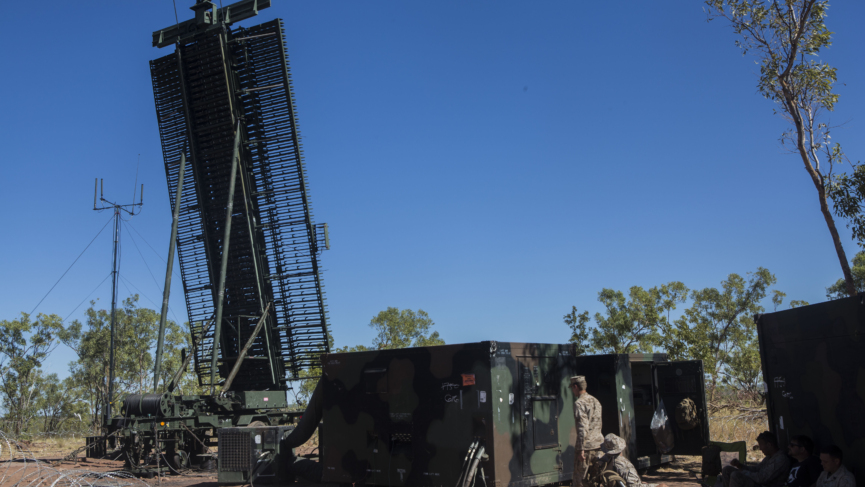
Defense systems rarely follow standard ISO container geometry or uniform weight distribution. Radar arrays, power units, and directed energy platforms often have irregular footprints or off-center loads that complicate lifting.

To accommodate these variables, structural design must include flexibility such as adjustable lift interfaces, removable frame inserts, or adaptable mounting points. Detailed center-of-gravity and load-path analysis early in the design process helps engineers anticipate how the system will behave under lift or movement. The result is a safer, more adaptable platform that maintains stability across environments.

0 J3 A4863

4. Minimize Dependence on External Assets

When lifting and mobility rely on heavy equipment or contractors, deployment flexibility suffers. Engineering deployability into the system itself eliminates these dependencies and gives operators control over where and when the platform can be moved.

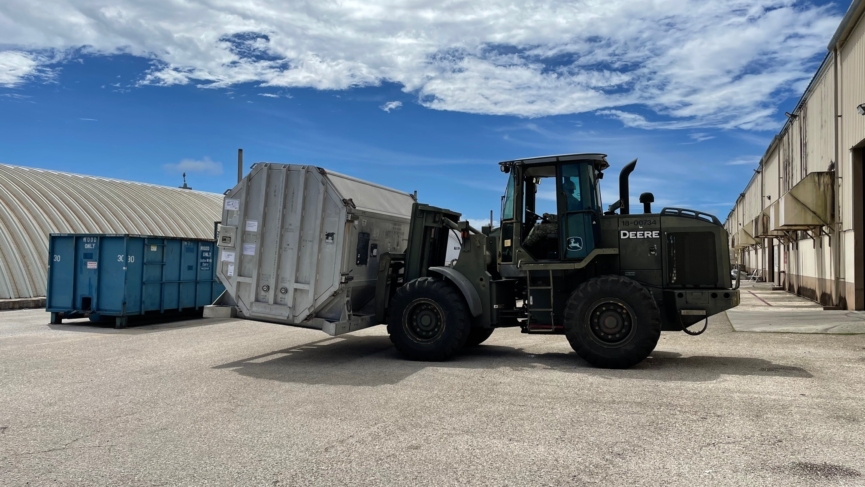
Integrated hoists, modular lift legs, or detachable mobility kits enable safe handling without cranes or forklifts, even in remote environments. Reducing external reliance doesn’t just improve agility it also enhances operational security and readiness by keeping movement entirely within the chain of command.

6621294

5. Validate Deployability Through Testing

Testing deployability during design and prototyping ensures that theoretical capability translates to real-world performance. This includes lift trials, ground interface testing, and transport simulations under realistic field conditions.

By validating early, engineers can fine-tune structural features, verify safe load handling, and confirm the practicality of setup and teardown procedures. Testing not only mitigates risk but also provides valuable feedback that informs future system iterations and standardizes best practices across programs.

CDS T Series Ad

Advancing Container Handling Capability for Containerized Defense Systems

  • Deployability is a core design factor in modern containerized systems, not an afterthought.

  • Integrating lifting and mobility capabilities early prevents costly redesigns and improves readiness.

  • Designing for real-world use cases ensures systems can be deployed, operated, and recovered safely.

  • Modern self-lifting and mobility solutions close the deployability gap and reduce dependence on external assets.

  • Proven technologies like the T Series, Mantis, and SDG help defense engineers deliver systems that perform wherever they’re needed.

Modern Container Handling Solutions for Containerized Defense Systems

Integrating mobility and lifting directly into system architecture is key to making containerized platforms truly deployable. The following proven systems are designed to help engineers embed these capabilities into new or existing designs.