Contact us

Container Handling for Modified Container Manufacturers

How leading manufacturers of BESS, mobile power, and industrial containers handle heavy units during production — without overhead cranes or outsourced lift services.

Bison Group

8 Apr 5 Minutes

Lifting

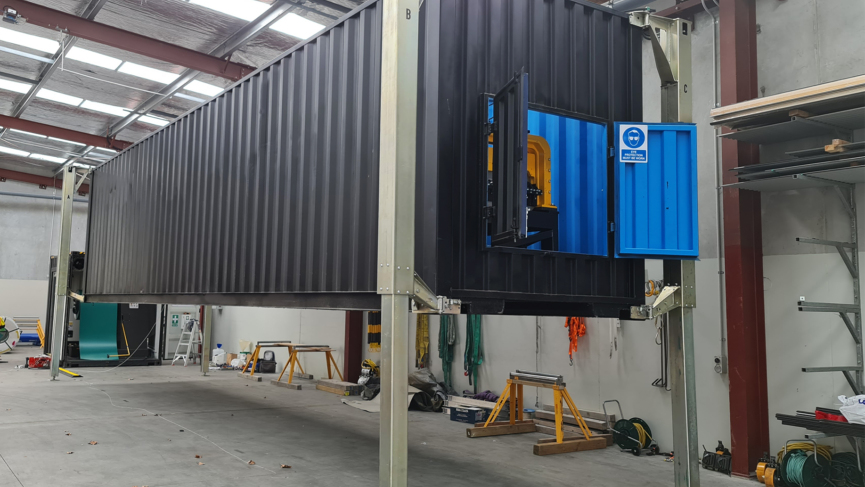
If you manufacture modified shipping containers — whether you’re building containerized battery energy storage systems, mobile power units, process skids, laboratory modules, or any other purpose-built containerized product — you know that the container itself is one of the largest, heaviest objects on your production floor.

And you know that moving it is one of the most persistent operational headaches in the business.

A fully loaded modified container can weigh 20,000 kg or more. During the manufacturing process, it may need to be lifted on and off truck trailers multiple times: receiving the bare container, repositioning it between production stages, loading it for testing, and finally shipping the finished unit to the customer.

Every one of those lifts is a decision point. And the method you use has a direct impact on production throughput, floor space utilization, worker safety, and cost.


The Typical Approach — and Why It Creates Bottlenecks

Most modified container manufacturers start with one of two approaches: an overhead crane or third-party crane hire. Both work. Neither works well at scale.

Overhead gantry cranes provide reliable lifting capability, but they come with serious constraints. They require significant structural investment — reinforced floor, support columns, overhead clearance. They consume valuable floor space. And they anchor your production to a fixed location: the container can only be lifted where the crane can reach.

For a manufacturer building a handful of units per year, this may be acceptable. But as production volumes grow, the gantry crane becomes a bottleneck. Every lift ties up the crane. Every container has to be in the right spot. And expanding capacity means expanding the crane infrastructure — a major capital project.

Third-party crane hire avoids the capital investment but introduces different problems. Each lift requires scheduling, coordination, and cost — typically thousands of dollars per mobilization. Production timelines become dependent on a third party’s availability. And for safety-conscious operations, every crane visit means managing a contractor on your premises.

There’s a third approach that some manufacturers default to: using a high-capacity forklift. This works for empty or light containers, but it’s genuinely dangerous for fully loaded modified units. The lift point is narrow relative to the container’s length, weight distribution is unpredictable, and the risk of tipping or dropping is real. It’s not a solution — it’s a compromise.

What Good Container Handling Looks Like in a Manufacturing Environment

The manufacturers who’ve solved this problem share a few things in common. Their container handling is:

Independent. They don’t wait for a crane company. They don’t schedule lifts around a contractor’s availability. They own their lifting capability and use it when production demands it.

Flexible on the floor. They can lift a container at multiple points in the facility, not just under a fixed gantry. This allows more efficient use of floor space and production flow.

Fast. The lift itself is quick — minutes, not hours — and doesn’t require a large team or specialist operators.

Safe for the asset. Modified containers house sensitive, expensive equipment. The lift method keeps the container level, minimizes shock and vibration, and doesn’t risk damaging external fittings, cabling, or ancillary components.

Economical at volume. The cost per lift is low enough that lifting containers is a routine production step, not a budget event.

A Series Portrait 9th

How Portable Container Lifting Jacks Fit a Manufacturing Workflow

Portable container lifting jacks are increasingly the preferred solution for manufacturers of modified shipping containers. Here’s how they’re a natural fit.

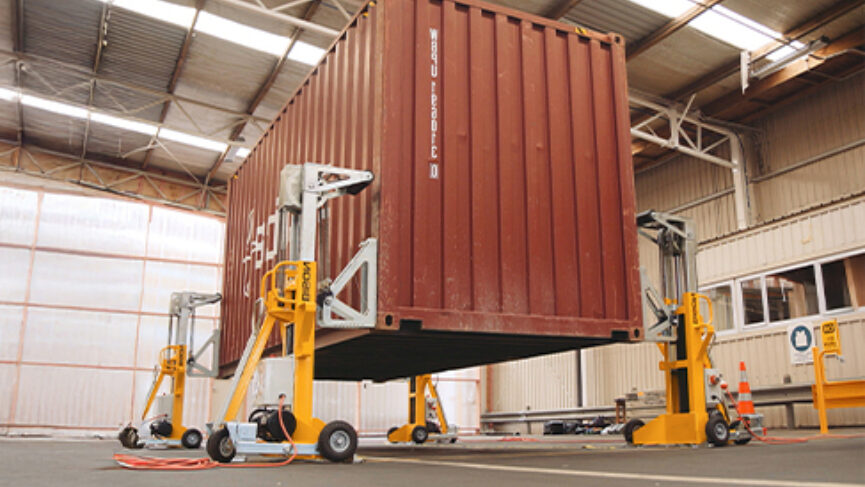
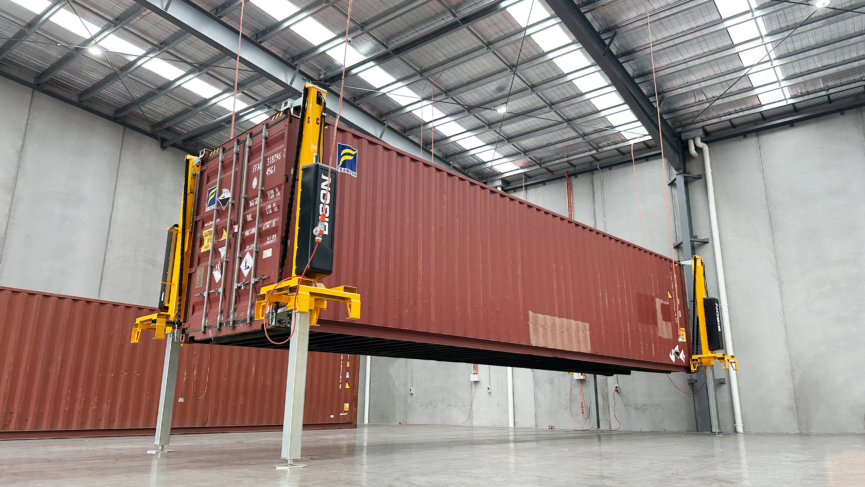
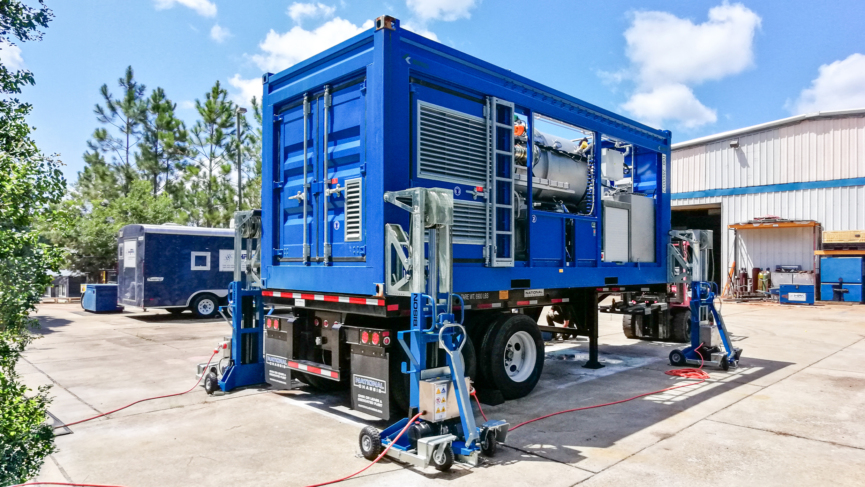
Receiving bare containers. When empty or partially fitted containers arrive on a truck, lifting jacks positioned at the corner castings raise the container, the truck drives out, and the container is lowered to the production floor. No crane needed.

Repositioning during production. Combined with container dollies, lifting jacks allow you to raise a container, roll it to the next production station, and lower it into position — all without tying up a crane or forklift.

Quality control and testing. If units need to be lifted for inspection, underside access, or testing between production stages, the jacks provide a quick, repeatable process.

Final loading and dispatch. When the finished unit is ready to ship, the jacks raise the container, the truck reverses underneath, and the container is lowered onto the chassis. The turnaround is fast, the process is controlled, and the customer’s asset is handled with care.

The key advantage for manufacturers is that the lifting equipment is always available, always on-site, and doesn’t require a dedicated overhead structure. It integrates into the production flow rather than constraining it.

MGF X Series 1

What to Look For in a Manufacturing Container Lift System

Not all container lifting equipment is suited to a manufacturing environment. When evaluating options, consider these factors:

Lift capacity. Your system needs to handle the maximum weight of your heaviest finished unit — with a safety margin. Modified containers commonly weigh between 10,000 and 35,000 kg (22,000 - 77,000 lb) fully loaded. Make sure the system covers your range.

Automation and speed. For manufacturers lifting containers frequently, automated systems with wireless remote control significantly reduce lift time and operator workload compared to manual alternatives. Look for self-leveling capability — it keeps the container stable and protects internal equipment.

Footprint and storage. Production floor space is valuable. A good system stores compactly and doesn’t require permanent installation. Some jacks stand upright and take up less than 4 m² (40 ft2) when not in use.

Compatibility. The system should work with all ISO container sizes you handle — 20-foot, 40-foot, 45-foot, standard and high-cube. It should attach at the ISO 1161 corner castings, which are present on all standard containers including those that have been heavily modified.

Multi-hoist configurations. If you manufacture longer or heavier units, look for systems that can be configured with six or eight hoists (rather than the standard four) to distribute the load across more points — particularly important for containers with delicate internal fit-outs that could flex under a four-point lift.

Real-time load monitoring. Being able to see the weight at each lifting point gives you production data as well as safety assurance.

Kiwi Roofing for Newsletter copy

The Business Case

For a manufacturer lifting containers regularly, the economics of owning portable lifting jacks versus outsourcing lifts are straightforward.

Consider a facility that receives and dispatches 100 modified containers per year. That’s at minimum 200 lifts (one to offload, one to reload). At a conservative crane hire rate of $1,500–$3,000 per mobilization, the annual cost of outsourced lifting is $300,000 to $600,000. A set of automated container lifting jacks represents a one-time capital investment that would be recovered in months in this scenario.

Beyond the direct cost saving, there are operational gains that are harder to quantify but equally real: faster production turnaround because lifts happen on demand, reduced scheduling complexity, lower risk exposure from fewer contractor visits, and the ability to use floor space more flexibly.

HPA Block
ESS Image
CUSTOMER STORY

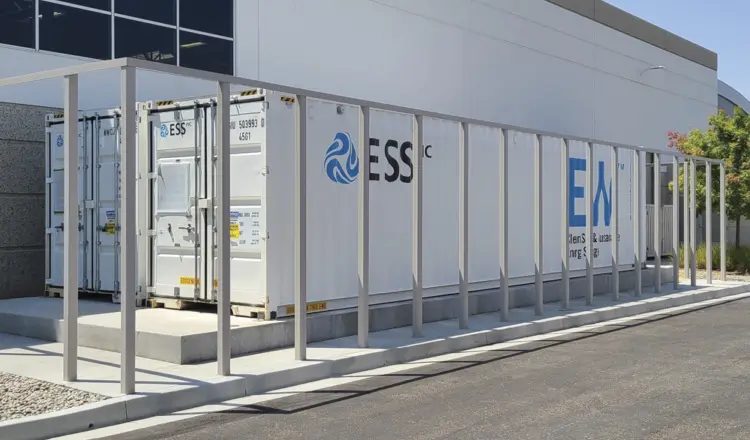
See how ESS Inc. and other manufacturers use Bison

"The X Series gave us flexibility to manage our fleet and not rely on outside services to re-enable production."

— Andrew Feist, Advanced Manufacturing Technical Leader, ESS Inc.

Next Steps

If you’re manufacturing modified shipping containers and your current handling approach is costing you time, money, or operational flexibility, it’s worth looking at what a purpose-built container lifting system could do for your production workflow.

Bison manufactures the widest range of portable container lifting jacks available, including automated systems designed specifically for manufacturing environments — with lift capacities up to 45,000 kg (98,000 lb), wireless remote operation, self-leveling, real-time load monitoring, and multi-hoist configurations for longer and heavier units.