Contact us

Container Handling Challenges You’ll Face When Relocating a Facility and How to Solve Them

Bison Marketing

1 Dec 5 Minutes

Logistics

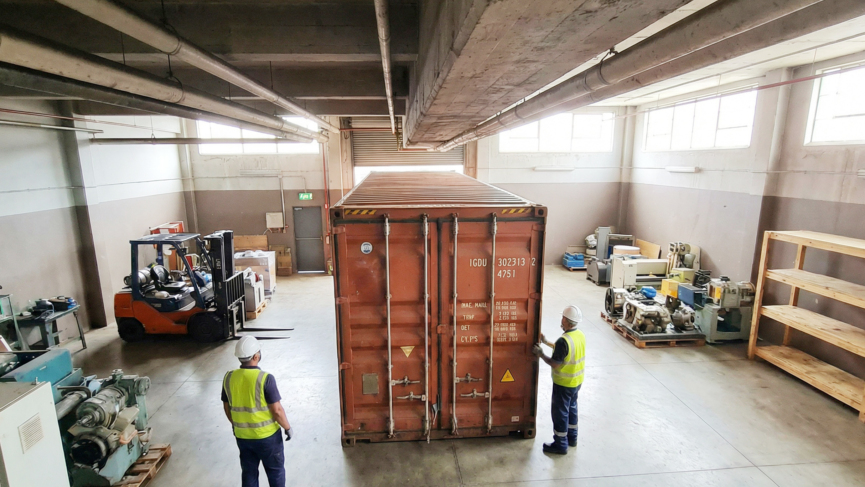
Relocating a factory or warehouse creates a unique set of container handling challenges. Whether you are evaluating a new facility, preparing to move, or settling into your new site, you quickly discover that many buildings are not designed to suit your specific container lifting, moving, or weighing requirements. Loading docks may not align with your workflow, internal access can be tight, ground conditions vary, and traditional equipment like forklifts, cranes, or sideloaders often depend on infrastructure that the facility may not have.

Portable container handling equipment offers a more flexible and efficient way to manage these challenges. With portable container lifting, mobility, and weighing systems, you can set up your operation wherever the space allows, adapt as your workflow evolves, and take the equipment with you if you relocate again.

Below are four common container handling challenges teams face during a factory or warehouse relocation, along with practical ways a more flexible approach can help you work through them.
1. We can’t find a facility that meets our container handling requirements

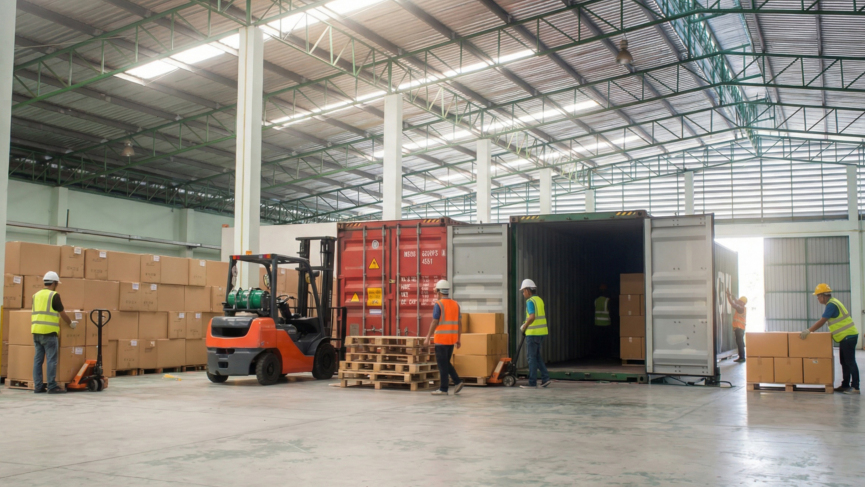
When scouting for new sites, most teams quickly realize that the “perfect” building rarely exists. Maybe the loading docks don’t line up with your workflow. Maybe internal pillars restrict forklift movement. Maybe the ceiling is too low for the equipment you rely on. Or perhaps the ground surface simply isn’t reinforced enough to support heavy container handling or container lifting equipment without costly civil upgrades.

These limitations often force companies to compromise on location, layout, or price or invest heavily in modifying the site during a facility or warehouse relocation.

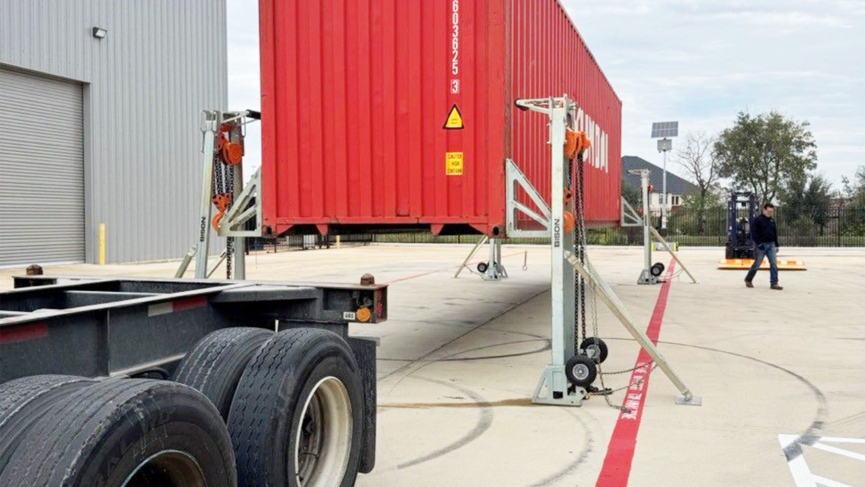
Portable container handling systems remove many of those constraints. With self-contained container lifting equipment that operates independently of docks, cranes, or forklifts, far more buildings become viable options. You can lift containers safely outdoors or inside, on uneven ground or in tighter spaces, and move them where they’re needed using portable mobility tools like Dollies.

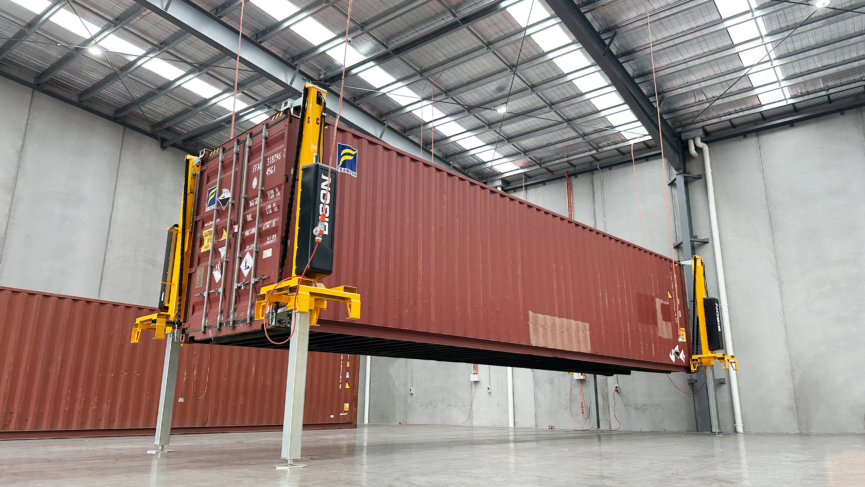
Bison’s portable solutions, including options like the C-Lift A Series and X Series, give you the ability to handle containers wherever the building allows, not just where the infrastructure dictates. That means you can focus on choosing a facility based on strategic value and operational needs, rather than limiting yourself to those who fit your container handling requirements perfectly.

Relocating Factories 3

2. We’re worried our container handling needs will change over time

A new facility is a long-term investment, but fixed infrastructure like overhead cranes, loading docks, and built-in foundations can limit how future-proof that investment really is. These permanent structures lock you into a specific layout. As your workflow grows or changes, or if you eventually need to relocate again, fixed infrastructure becomes difficult to repurpose and impossible to take with you.

Portable container handling systems give you the flexibility to adapt your operation as it evolves. You can lift containers wherever it makes sense using portable container lifting equipment, move them through the facility with container mobility tools such as Dollies, and integrate container weighing wherever it fits naturally into your workflow. The same portable equipment that helps you during a warehouse or facility relocation continues to support layout changes, process improvements, and shifts in how your operation runs.

Future-proofing also means being ready for growth. Whether you add new bays, extend your footprint, or start handling containers outdoors, portable container handling equipment adapts without requiring new foundations or structural work. Instead of building capability into the facility, you take it with you wherever your operation goes next.

MGF X Series 1

3. Our new facility isn’t designed for how we need to handle containers

Most companies move into facilities that were not an exact match for their workflow but made sense for location, availability, or cost. Once you start moving in, the limitations become clearer: ceiling heights that do not suit container lifting equipment, pillars that interrupt movement paths, and loading docks that do not line up with internal processes. And if you are renting, major modifications may not be allowed at all.

In these situations, portable container handling systems give you practical ways to work effectively within the space you have. You can lift containers outside where there is more clearance, move them inside on Dollies to reach work areas, and position them exactly where the work needs to happen without relying on internal forklift access or overhead infrastructure.

This allows you to use the building as it is, without investing in new docks, pits, structural upgrades, or other permanent changes.

Many teams turn to Bison’s A Series, X Series, and Dollies to make an imperfect facility work. By lifting where the space allows and moving containers into the areas where work needs to happen, they avoid the cost and delays of structural modifications. It is a straightforward way to build an efficient workflow in a building that was never designed for container handling.

Relocating Factories 5

4. Setting up the container handling capability we need is too costly

Relocating is expensive enough without adding permanent infrastructure to the list. New leases or build costs, setup expenses, and downtime already create pressure, and installing overhead cranes, loading docks, or reinforced foundations can quickly increase capital spend and lock you into decisions you may later outgrow.

Portable container handling equipment offers a more cost-effective way to achieve the same capability during a warehouse or facility relocation. The Bison A Series and X Series provide safe, foundation-free container lifting and positioning, and Dollies support container mobility without modifying floors or access points. Optional portable weighing equipment such as Bison C-Jacks enables fast, on-site weight checks during setup and beyond.

Instead of investing in infrastructure that stays behind when you move, you invest in equipment you own, can redeploy in different ways as your layout evolves, and can take with you to future sites. This approach reduces upfront cost, keeps your options open, and gives you long-term flexibility as your operation grows.

Globe Power Image 1

A Flexible Way to Make Any Facility Work

Relocating a facility is never straightforward, but container handling doesn’t need to be the limiting factor. A flexible approach gives you more choice in where you set up, more control over how your workflow operates, and the freedom to adapt as your needs change.

Here’s a simple way operations teams use portable container handling to make relocations smoother and more efficient:

How flexible container handling fits into a facility move

  • Lift ISO containers in the area with the most space or clearance

  • Move them into the facility or work area as needed

  • Position them exactly where work happens

  • Weigh if required during setup or commissioning

This approach lets you build the container handling capability you need without depending on the building to provide the infrastructure. It works in imperfect facilities, supports layout changes over time, and moves with you if you relocate again.

If you’d like help planning your container handling workflow or understanding which equipment fits your situation, our team is here to support you.

Related Equipment You Might Consider

Many teams use a combination of portable container lifting, mobility, and weighing equipment to make their relocation workflows smoother and more efficient. Bison’s range of portable container handling solutions is designed to support these workflows in a practical and flexible way, even when the facility was not originally built for container handling.