Contact us
ELP Banner Mantis

How Military Bases Can Improve Container Handling Without Cranes or Contractors

Bison Marketing

18 Dec 5 minutes

Defense

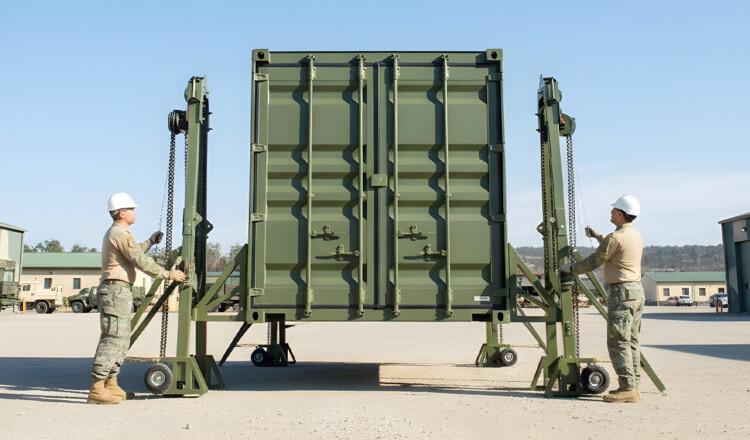
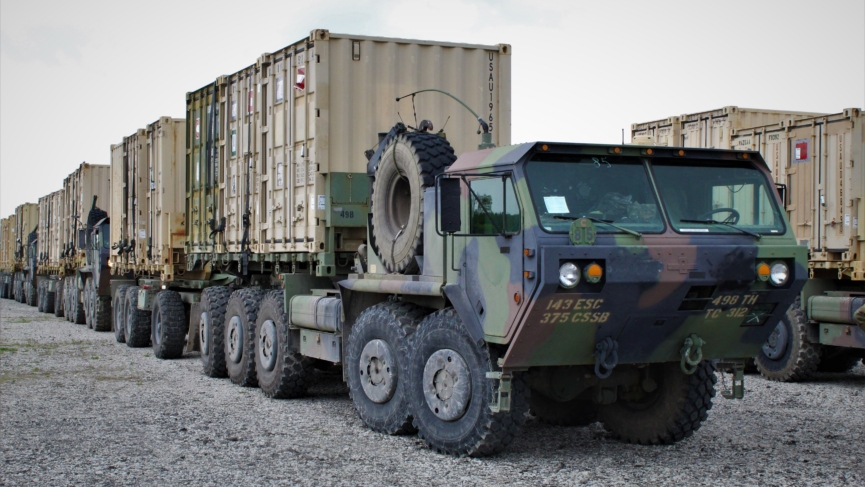
On military bases, containers play a vital role in daily operations, storing equipment, supplies, and mission-critical systems. Many bases rely on systems such as PLS trucks or hook-lift units, alongside cranes, reach-stackers, and forklifts. While these tools are proven and essential for many tasks, they can become bottlenecks when tied up, under maintenance, or when external contractors are needed. Logistics can quickly stall, impacting readiness and introducing cost, complexity, and potential security risks.

To maintain readiness and control, base logistics teams need safe, efficient, and self-sufficient ways to lift, move, and weigh containers, without depending solely on heavy equipment, specialized trucks, or external personnel.

5306963 1

Core Challenges

Container handling is a routine but essential part of base logistics. Containers store equipment, supplies, and mission-critical systems that must be repositioned efficiently to keep operations running smoothly. Yet for many bases, container handling remains dependent on infrastructure and resources that aren’t always available when needed.

Base logistics teams often face several recurring challenges:

  • Heavy reliance on cranes, forklifts, or external contractors limits flexibility and can delay mission timelines when equipment or vendors are unavailable. These dependencies increase cost and reduce the base’s ability to respond quickly to changing priorities.
  • Competing equipment demands. Cranes and forklifts are often shared across units, causing scheduling conflicts and unplanned downtime that slow daily operations.
  • Restricted access or limited space. Tight storage areas, maintenance zones, or covered facilities can make it difficult or unsafe to move containers using large machinery.
  • Security and control concerns. Bringing in outside contractors for container handling introduces potential security risks and reduces oversight of sensitive or classified assets.

Overcoming these challenges requires a shift toward self-sufficiency and the development of safe, efficient, and reliable container handling processes that give base logistics teams full control over their schedules, resources, and operational tempo.
Steps to Improve Container Handling in Base Logistics

Improving container handling on base starts with building greater control and self-sufficiency. By addressing equipment dependencies, process inefficiencies, and security risks, logistics teams can reduce downtime, increase flexibility, and maintain readiness, even when resources are limited. The following steps outline practical ways to strengthen base logistics operations:

1. Reduce Dependence on Shared Equipment

Shared lifting assets are one of the biggest sources of delay in base operations. Equipment like cranes, forklifts, and reach stackers is often shared between units, creating scheduling conflicts and slowing routine work such as resupply, maintenance, and redistribution.

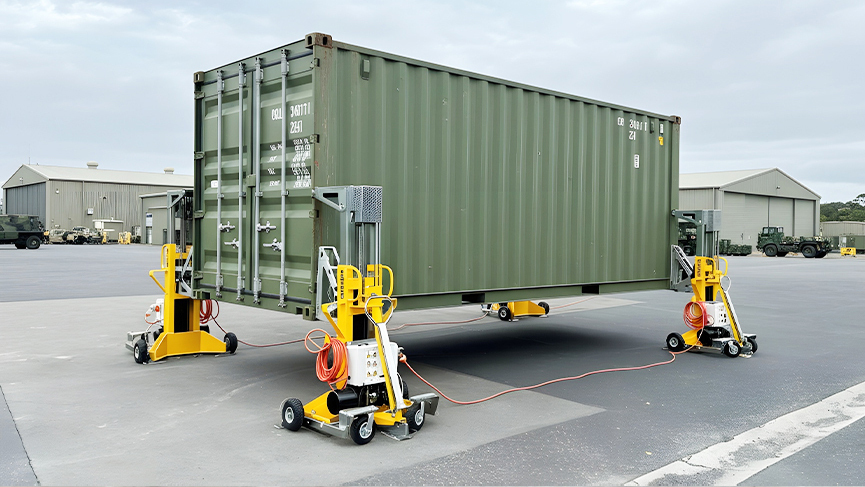
Tracking how often shared assets cause idle time or rescheduling helps identify the scale of the issue. Introducing dedicated or portable handling solutions allow essential tasks to continue without waiting for availability, keeping logistics moving and improving mission tempo.

BL EN1

2. Improve Safety and Flow in High-Traffic Areas

Unlike controlled factory floors, bases are dynamic environments with people, vehicles, and equipment constantly in motion. Moving containers through maintenance zones, supply yards, or fuel depots can create bottlenecks and raise the risk of incidents.

Improving safety starts with simplifying movement and reducing congestion. Identify zones where large lifting machinery struggles to maneuver safely, and introduce smaller, purpose-built systems that provide better control and visibility. This not only reduces risk but also smooths traffic flow across the base.

9466262

3. Increase Reach and Access Across the Base

Bases are often sprawling and uneven, with container storage and deployment points scattered across different surfaces or structures. Heavy equipment can’t always access every area — particularly under canopies, inside shelters, or on soft ground.

Mapping access limitations and introducing portable or self-contained lifting solutions helps ensure containers can be handled anywhere they are needed. Greater reach improves flexibility and supports uninterrupted logistics operations across the entire base.

8818964

4. Build In-House Capability and Reduce External Dependence

Many bases rely on contractors for complex container handling tasks, especially when heavy lifts are involved. While convenient, this dependence introduces delay, extra cost, and security concerns when external personnel are required on site.

Developing in-house capability allows bases to act immediately when needs arise. Evaluate which container handling activities can be completed internally with proper tools and training. Bringing capability in-house increases responsiveness, safeguards sensitive assets, and reinforces self-sufficiency across base logistics.

Improving container handling on base is about building control, safety, and flexibility into daily operations. By reducing dependence on heavy equipment and contractors, strengthening safety and mobility, and developing in-house capability, bases can keep logistics flowing smoothly even when resources are limited.

Once these challenges are understood, the next step is finding practical tools and systems that make independent, efficient container handling possible across every part of the base.

9199185

Advancing Container Handling Capability on Base

  • Container handling directly affects the speed, safety, and resilience of base logistics operations.

  • Heavy equipment dependency limits flexibility and can delay critical missions.

  • Simplifying handling processes improves safety, access, and responsiveness.

  • Reducing contractor reliance strengthens security and operational control.

  • Building in-house capability keeps container logistics on schedule and within command.

  • Modern lifting, weighing, and mobility systems empower bases to handle containers safely and efficiently —anywhere, anytime.

Portable Container Handling Solutions for Base Logistics

Modern base logistics demands equipment that supports mobility, speed, and independence. Traditional cranes and forklifts remain essential, but they can’t always reach your location or meet your timeline. Bases need flexible, deployable systems that extend handling capability beyond fixed infrastructure, enabling teams to lift, move, and weigh containers anywhere required.