Contact us
Defense Manufacturing Banner Final

Improving Container Handling in Defense Manufacturing Without Heavy Equipment

Bison Marketing

18 Dec 5 minutes

Defense

In defense manufacturing, container handling is a critical part of production and delivery. Containers are used in two main ways:

  • To move high-value components, finished systems, and essential materials between facilities, partners, and end users

  • As integral parts of the systems being built, such as radar units, tactical shelters, or other containerized platforms.

In both cases, containers must be lifted, positioned, and moved safely throughout production, testing, and integration. When handling processes are slow, dependent on unreliable or expensive external equipment, or vulnerable to disruption, the impact is felt across the entire production schedule.

9190987 1

Core Challenges

Container handling is often treated as a support function within manufacturing operations, something that happens between more visible stages like production, integration, and shipping. Yet for many defense manufacturers, it’s a hidden driver of production efficiency, safety, and cost control. When container lifting and movement processes are inefficient, the entire operation feels it.

Defense manufacturing facilities face specific challenges that make container handling anything but simple:

  • Heavy reliance on cranes, forklifts, or external vendors adds cost, creates delays, and limits flexibility when equipment or contractors aren’t available on demand.

  • Limited space in factory and yard environments makes large equipment impractical or impossible to use, especially in confined production areas.

  • Inefficient processes and manual workarounds slow down schedules and increase risk when speed and precision are critical.

    Modern defense manufacturing demands safer, more efficient, and space-conscious ways to lift, weigh, and move containers. Streamlining container handling not only shortens turnaround times and reduces reliance on third parties but also improves consistency and operational control.
Steps to Improve Container Handling in Manufacturing

Improving container handling in defense manufacturing starts with rethinking how it supports production goals rather than viewing it as a logistical afterthought. By adopting smarter, safer, and more efficient methods, manufacturers can improve throughput, safety, and operational control. The following best practices can help teams make meaningful improvements:

1. Reduce Reliance on Heavy Equipment

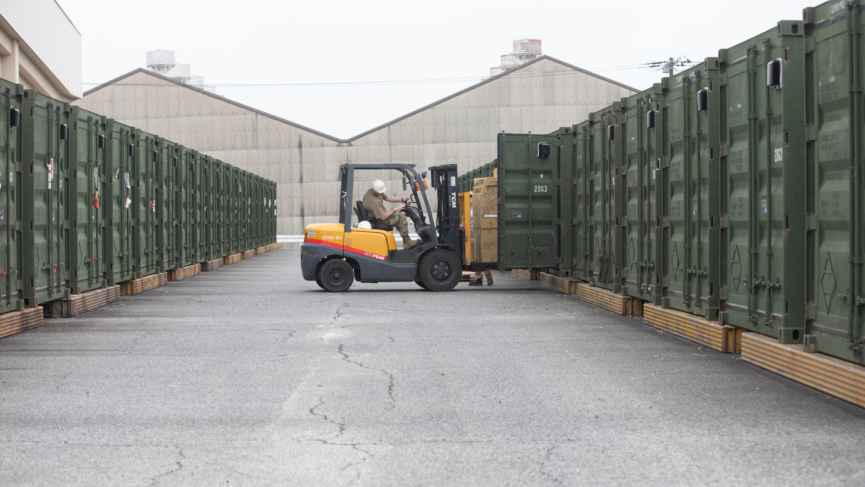
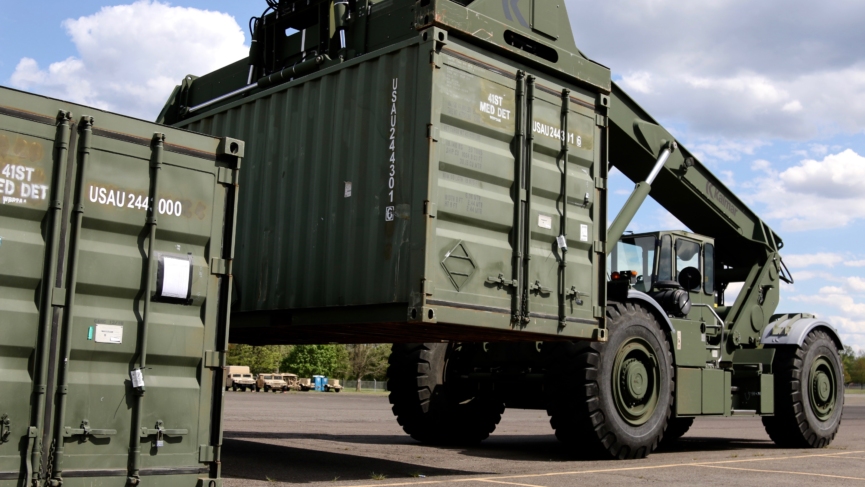
Reliance on heavy equipment for container handling is a key contributor to delays, inefficiencies, and rising costs in defense manufacturing. Cranes, forklifts, and reach stackers are expensive to operate, require skilled operators, and are often shared resources — meaning production schedules frequently depend on their availability.

To understand the true impact on your organization, start by identifying where these dependencies create bottlenecks or downtime and quantify the cost in lost production hours, scheduling conflicts, and contractor fees. This data will reveal whether reliance on heavy equipment is causing serious inefficiencies in your manufacturing operation, and where performance and budgets are being constrained.

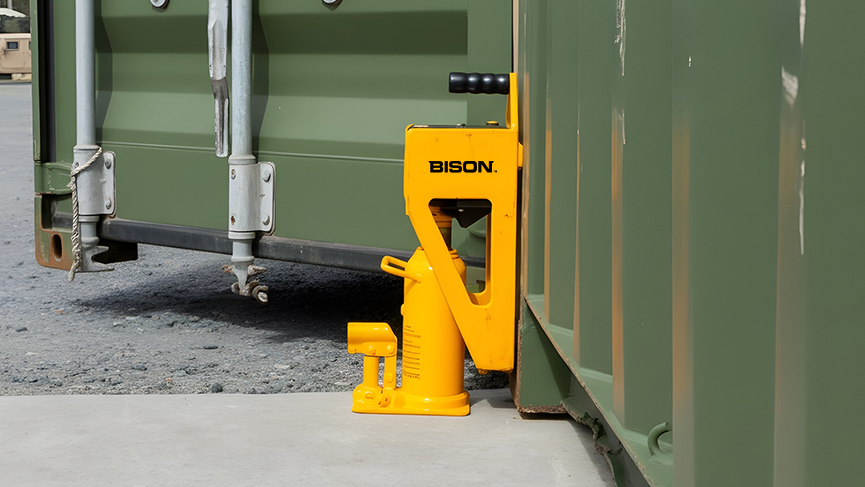
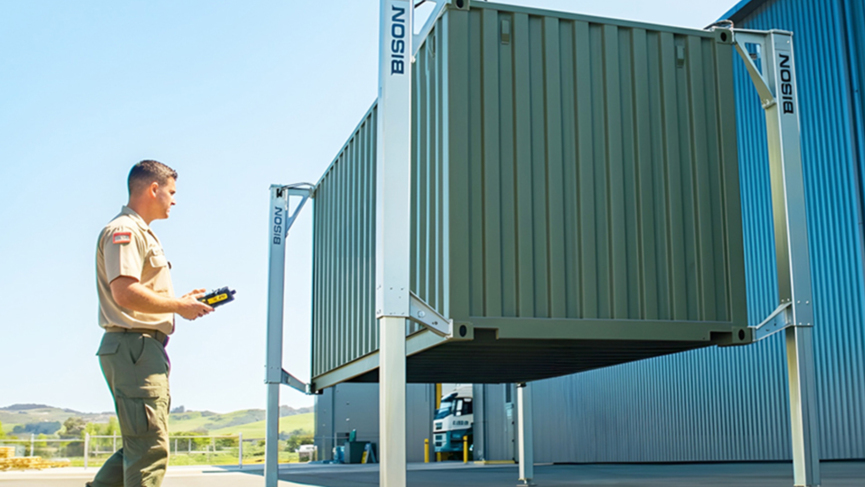
If you determine that reliance on heavy equipment is a challenge in your organization, it’s worth exploring alternatives. Today, modern container handling systems, like those developed by Bison, offer a practical alternative. Portable, flexible, and easy to operate, they can take over many of the tasks currently managed by heavy equipment, improving control, responsiveness, and overall efficiency.

6198247 1

2. Improve Safety in Container Handling

Safety is a critical consideration in any defense manufacturing environment — especially when handling heavy containers and equipment. Cranes, forklifts, and other large machinery increase the risk of accidents, collisions, and damage to sensitive systems, particularly in busy or confined areas.

To identify safety improvement opportunities, start by reviewing where and how incidents, near misses, or manual handling risks occur. Track the causes — such as limited visibility, uneven surfaces, or excessive reliance on personnel to guide or steady loads. Understanding these patterns provides clarity on where changes to processes or equipment can have the most immediate safety benefits.

Addressing these risks often requires simplifying the way containers are handled. Modern container handling systems can help by reducing manual intervention, providing better control during lifts, and improving operator visibility. The result is a safer, more predictable working environment that protects both people and equipment while maintaining productivity.

C25b66fd 7840 47c8 99b4 4832e7dd2cf2

3. Overcome Space Constraints

In some defense manufacturing facilities, space is limited and large-scale container handling equipment isn’t always an option. At times, cranes simply cannot be used due to ceiling height restrictions or structural limitations. Forklifts and reach stackers, while versatile, can be too large to maneuver safely around production areas or between test bays.

These constraints can slow operations, limit flexibility, and increase the risk of congestion or damage when containers must be moved through tight spaces. To assess the impact, map out areas where container handling is restricted or where large machinery creates operational bottlenecks.

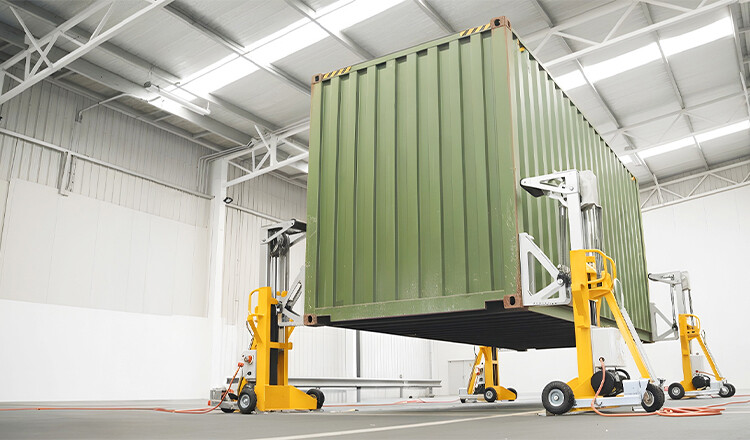
If space limitations prevent the use of heavy equipment in your manufacturing operation, consider leveraging compact, mobile container handling systems like those developed by Bison. They allow safe, efficient movement in confined or indoor areas, giving manufacturers greater flexibility to handle containers anywhere without redesigning facilities or compromising safety.

00d722a8 0f7b 4b40 9ef4 a187b29fc5ae

4. Integrate Weighing Into Workflows

Not every defense manufacturer needs to weigh containers, but for those that do, it is often a critical step in the production or dispatch process. Whether for compliance, payload optimization, or cost control, obtaining accurate weight data at the right stage is essential to maintaining efficiency and avoiding downstream issues.

In many facilities, containers must be transported to an external weighbridge to record their weight. This adds unnecessary time, cost, and disruption — pulling containers and operators away from other tasks. The process also increases the risk of error or delay, especially when timing is tight or production schedules change.

When accurate weighing is important to your operation, integrating this capability directly into on-site workflows can make a significant difference. The ability to weigh containers anytime and anywhere streamlines compliance, improves payload accuracy, and reduces reliance on external equipment or facilities — resulting in faster, more efficient operations and more consistent data.

C Jacks DMP 2

5. Bring Capability In-House

For many defense manufacturers, container handling depends on shared equipment or external contractors. While this approach can seem cost-effective at first, it often introduces hidden costs — from scheduling delays and coordination challenges to reduced flexibility when priorities change. Over time, these dependencies can become a major source of inefficiency.

To evaluate the impact, start by identifying how often external support or shared machinery is needed and what it costs in both time and productivity. Quantify waiting times for cranes or forklifts, the fees associated with third-party handling, and any production slowdowns caused by limited access to equipment. This data will help determine whether the current approach truly supports operational goals.

Building in-house capability gives manufacturers greater control over timing, security, and quality. It also reduces the administrative and operational complexity of managing outside vendors. With the right tools and training, container handling becomes a seamless part of production — one that enhances agility, strengthens operational resilience, and helps keep critical programs on schedule.

Improving container handling is not just about finding new equipment. More than anything, it’s about identifying inefficiencies, understanding their impact, and implementing smarter, safer, and more flexible processes. For many defense manufacturers, this starts with reducing reliance on heavy equipment, improving safety and space efficiency, integrating weighing where it matters, and building greater in-house capability.

Once these opportunities are understood, the next step is finding the right tools to make change practical and sustainable.

T Series Portrait DMPB

Advancing Container Handling Capability in Manufacturing

  • Reliance on heavy equipment creates hidden bottlenecks. Cranes, forklifts, and contractors add cost, limit flexibility, and slow production.
  • Improving safety reduces risk and downtime. Simplified, well-controlled handling lowers hazards to people and equipment.
  • Space constraints demand compact solutions. Mobile systems enable safe, efficient handling where cranes and forklifts cannot operate.
  • Integrated weighing streamlines compliance and accuracy. On-site weighing saves time and improves reliability.
  • Building in-house capability improves control and resilience. Self-sufficiency reduces dependency and supports readiness.
  • Modern container handling systems can close the gap. Smarter lifting, weighing, and mobility tools help defense manufacturers overcome challenges and optimize performance.

Modern Container Handling Solutions for Defense Manufacturing

Modern defense manufacturing requires container handling systems that are precise, adaptable, and efficient. Whether it is transferring containers between ground and chassis, managing payloads, or verifying weights for compliance, the right equipment can make these operations faster, safer, and more predictable.

Bison’s range of container lifting, weighing, and mobility solutions is designed to meet these needs. Compact, mobile, and engineered for demanding environments, they help defense manufacturers reduce downtime, improve safety, and maintain full control over container handling at every stage of production and logistics.